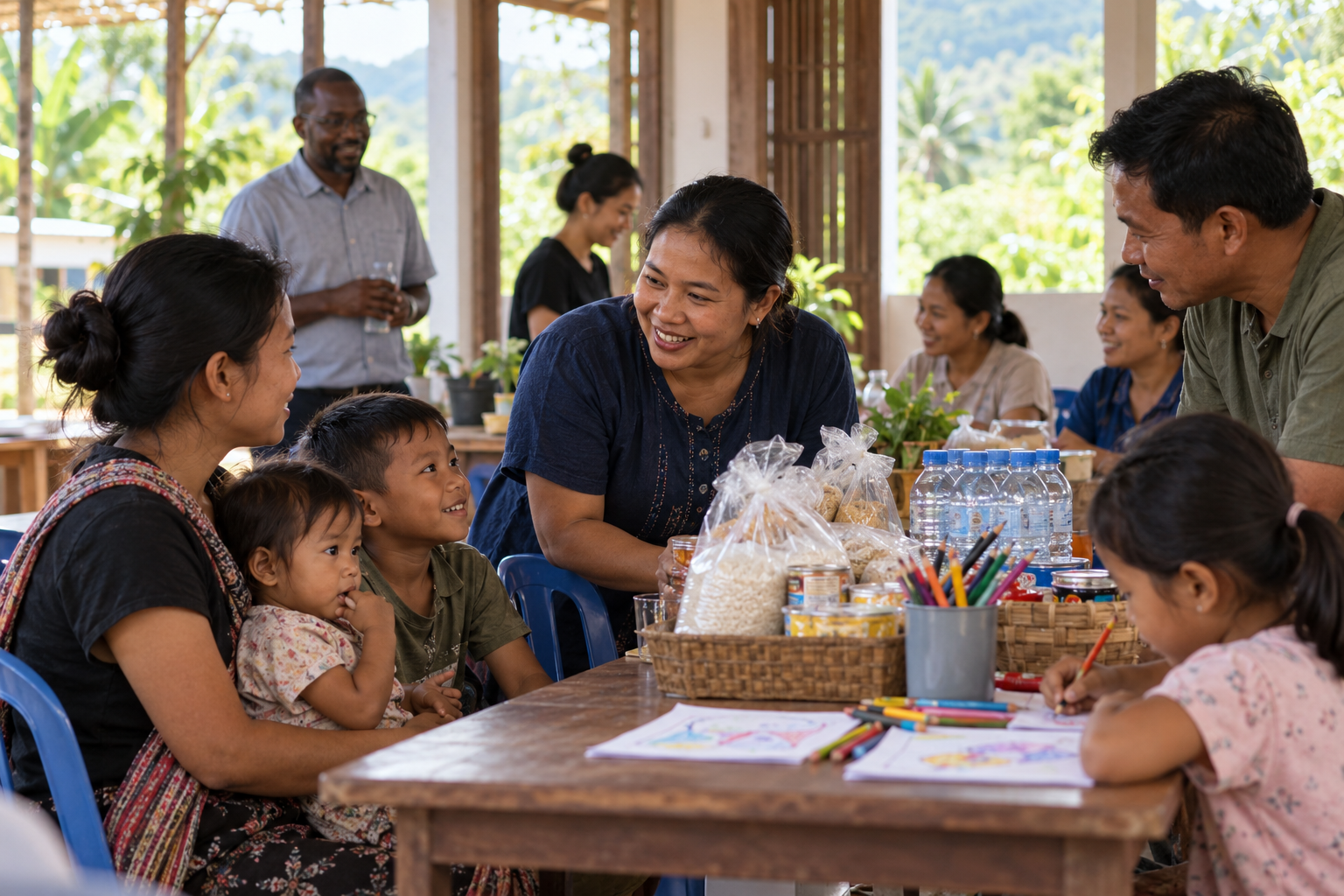
A border can mark the edge of a country, but it does not mark the edge of Christian compassion. When families flee violence, disaster, or fear, the church is called to see people before labels: a mother looking for safety, a child missing school, an older person separated from home, and a neighbor carrying a story that deserves respect.
That call is urgent across Southeast Asia. United Nations data updated on October 12, 2026 records more than four million people displaced inside Myanmar. A separate UNHCR regional update says 1.64 million people from Myanmar are refugees or asylum-seekers. Some remain close to home; others seek safety in Thailand, Malaysia, Bangladesh, India, and elsewhere. Behind every large number are individual lives, families, languages, and hopes.
October 24 is United Nations Day, marking the anniversary of the UN Charter coming into force in 1945. This year's message calls for dialogue over division, cooperation over confrontation, and solidarity over fear. Christians do not need to agree on every political question to recognize those values in the command of Jesus: love God and love your neighbor. The practical question is how to live that love wisely when people have been displaced.
Begin with dignity, not a rescue story
Displaced people are not helpless characters waiting for an outsider to become the hero. Many have protected children, supported relatives, led churches, taught classes, managed businesses, farmed land, and served their communities through extraordinary pressure. They bring knowledge and abilities as well as needs.
A church can begin by asking, “What do you need?” and “How would you like to participate?” rather than deciding everything in advance. Invite displaced people and trusted community representatives into planning. Pay them fairly when they translate, teach, coordinate, cook, or advise. Where Myanmar churches and ethnic community networks are already serving, strengthen their work instead of building a competing ministry around them.
Use careful language. A refugee is someone outside their country who needs international protection. An asylum-seeker is waiting for a decision on a protection claim. An internally displaced person has fled home but remains within their own country. People may also have uncertain or different legal status under the laws of the country where they are staying. A church should not guess, label, or promise a legal outcome.
Listen before you organize
Needs differ by place and season. One community may need school access, another safe transport, another medicine, and another help understanding official information. Begin with a small listening group led by people who know the local language, culture, law, and protection risks. Include women, young people, older adults, and people with disabilities without pressuring anyone to disclose painful experiences.
Do not collect more personal information than is necessary. Names, photographs, phone numbers, migration routes, family connections, and exact locations can create danger if shared carelessly. Never post a person's face or story to raise funds without informed, voluntary consent. A grateful smile is not the same as permission. Children cannot be used as publicity for a mission trip.
Churches should also resist the urge to arrive at a sensitive location unannounced. Border areas and conflict-affected communities may have security restrictions and changing conditions. Work with lawful, trusted local partners. Do not attempt unofficial border crossings, enter active conflict zones, move people without proper authority, or ask volunteers to perform roles for which they are not trained.
Offer practical care without conditions
Christian service must never make food, shelter, documents, transport, or medical care dependent on listening to a sermon, attending worship, changing religion, or being baptized. Help should be based on need and given without discrimination. People in crisis may feel unable to refuse an invitation from someone controlling an essential resource; that power imbalance matters.
Faith can still be shared with humility. Explain openly that the church is serving because of the love of Christ. Ask before praying with someone. Make worship voluntary. Answer spiritual questions honestly, but do not exploit fear or dependency. A respectful witness gives people freedom rather than using hardship as leverage.
Practical help may include water, nutritious food, hygiene items, temporary accommodation, language support, transport to recognized services, school supplies, childcare, livelihood training, or a safe place to rest. Cash or vouchers can sometimes give families more choice than preselected goods, but churches should follow experienced humanitarian partners on what is safe and appropriate in the local setting.
Build partnerships before the emergency
No congregation should try to manage a displacement crisis alone. Map reliable partners now: local churches, community-led organizations, social workers, health clinics, schools, legal-aid groups, child-protection specialists, and agencies experienced with refugees and internally displaced people. In some places, UNHCR or its official partners can provide current referral information.
A referral list must be checked regularly. Services change, offices move, and phone numbers stop working. Do not publish sensitive contacts or directions if doing so could place staff or displaced people at risk. Designate trained leaders who understand when to refer a medical emergency, suspected trafficking, child-safeguarding concern, gender-based violence, or urgent protection need.
Partnership also requires accountability. Keep simple records of funds and supplies without exposing recipients. Use more than one person to approve purchases and distributions. Provide a safe way for community members to report misconduct. Investigate complaints fairly, including complaints about popular pastors, missionaries, donors, or partner organizations.
Make children and vulnerable adults safer
Displacement can separate families and increase the risk of exploitation, unsafe work, trafficking, child marriage, and abuse. Every ministry serving children needs a written safeguarding policy, screened workers, visible activity spaces, and a rule that one adult is not left alone with a child. Volunteers should know how to respond to a disclosure without interrogating the child or promising secrecy.
Do not arrange informal adoptions, take children across borders, or place them with unknown households. Family tracing, alternative care, and reunification require qualified child-protection authorities. If a child appears to be alone, contact an authorized protection service rather than creating a private solution.
Older people, pregnant women, people with disabilities, survivors of violence, and those with serious health conditions may face barriers that are easy to miss. Ask what would make services accessible. This may mean home delivery, transport, interpretation, privacy, a shorter queue, or a trusted woman available during a conversation.
Practice trauma-aware hospitality
Not every displaced person has a mental-health condition, but many have experienced loss, uncertainty, or repeated stress. Volunteers do not need to ask for the full story. In fact, repeated questioning can be harmful. Offer calm information, predictable routines, choices, and respectful listening. Avoid sudden touch, public prayer over a person's trauma, or dramatic promises that pain will disappear immediately.
Some people will want to talk; others will not. Both responses deserve respect. Learn how distress may be expressed across cultures and languages. Connect people with qualified local mental-health or psychosocial services when needed. Missionaries and pastors should stay within their competence rather than diagnosing, prescribing, or replacing trained care.
Volunteers also need support. Teams exposed to difficult stories can become overwhelmed or numb. Use realistic shifts, confidential debriefing, rest, prayer, and supervision. A healthy ministry does not celebrate exhaustion as proof of devotion.
Choose peace without turning aid into politics
Churches can pray for justice, peace, safe humanitarian access, and the protection of civilians. They can teach the biblical value of every person and reject hatred directed at any ethnic, religious, or national group. They can support truthful advocacy through credible organizations.
At the same time, relief activities should not become a platform for partisan slogans, intelligence gathering, or pressure on recipients to take a public political position. Neutral, needs-based service helps protect access and trust. Local Christian leaders often understand risks that visiting teams do not; their judgment should carry real weight.
ASEAN has continued to call for collective efforts and a peaceful, durable, Myanmar-led solution while recognizing the need for humanitarian assistance. Churches contribute best when they coordinate, refuse discrimination, and serve people rather than trying to become diplomatic actors.
Turn welcome into patient companionship
An emergency distribution can help for a day. Belonging grows over time. Invite displaced neighbors into ordinary community life without putting them on display: shared meals, language practice, children's activities, job mentoring, worship for those who choose it, and friendships that continue when public attention moves elsewhere.
Ask what gifts people want to contribute. A teacher may help children learn. A cook may shape a community meal. A pastor may strengthen a congregation. A young person may interpret across languages. Mutual service changes the relationship from “giver and receiver” to neighbors carrying one another's burdens.
The scale of Myanmar's displacement can feel too large for one church. Yet faithfulness is rarely measured by solving everything. It can look like one secure referral, one family welcomed without shame, one child protected, one volunteer trained, or one local partner strengthened. On a day that calls the world toward cooperation and solidarity, the church can offer a simple witness: across the border, you are still our neighbor.
Further reading: the UNHCR Myanmar displacement dashboard, UNHCR's September 2026 data and trends update, the 2026 United Nations Day message, and the ASEAN 48th Summit Chair's Statement.
Help a local church welcome wisely
Pray with SendUsAll, support practical care, or ask how your church can strengthen locally led mission across Southeast Asia.
Contact SendUsAll