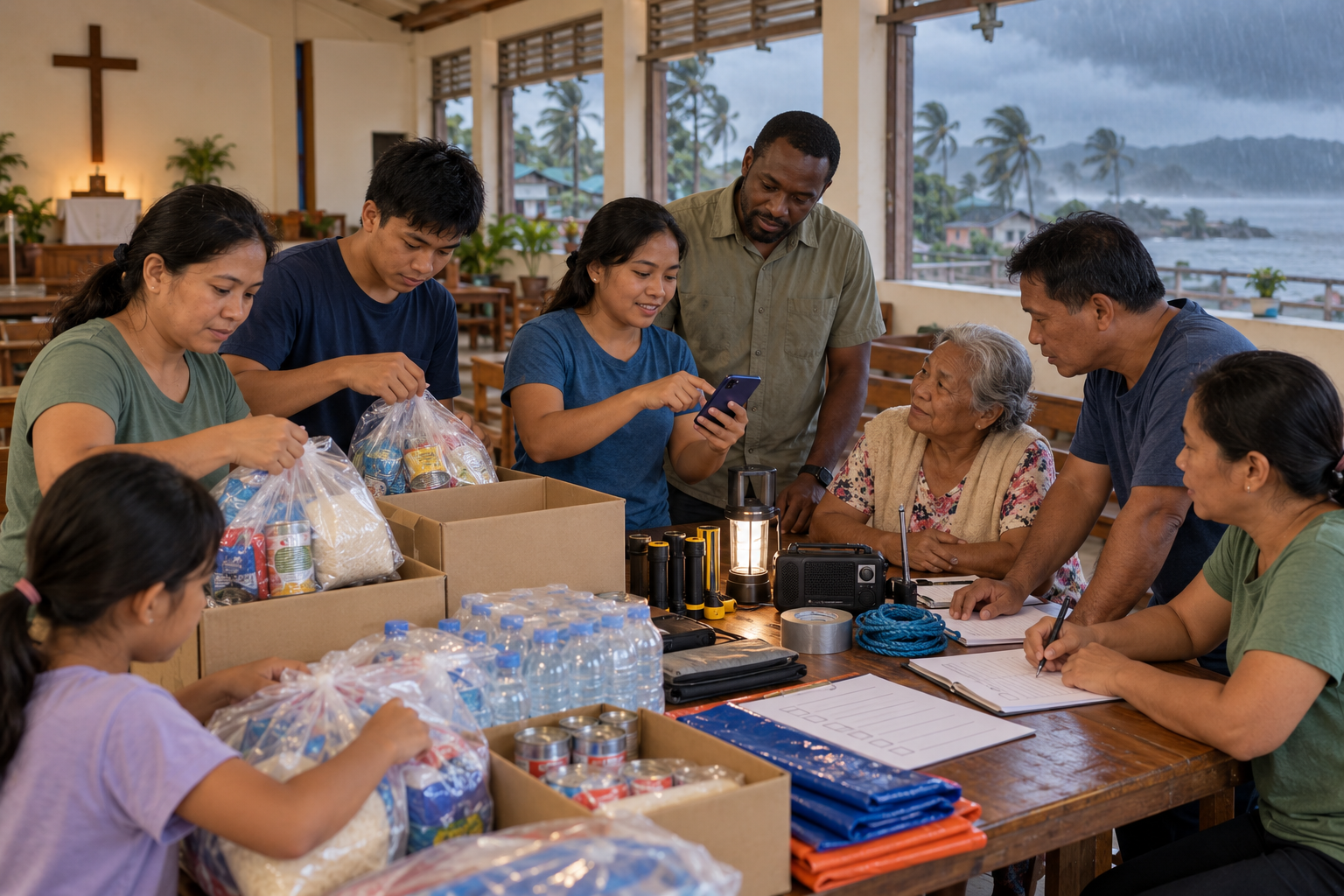
When a storm is still beyond the horizon, preparation can look ordinary: a charged phone, a list of older neighbors, clean water, working flashlights, and a church team that knows who will call whom. Yet these quiet actions can protect life, reduce fear, and become a powerful expression of Christian love.
That need is especially clear this week. In an outlook issued on October 16, the Philippine weather agency PAGASA forecast scattered rain and thunderstorms over the Visayas, Caraga, and Northern Mindanao from October 19 to 22 because of the trough of a tropical cyclone expected to enter the Philippine Area of Responsibility. The AHA Centre's regional update for October 12 to 18 also recorded nine disasters across ASEAN, including floods, storms, droughts, and wind-related events. These reports are a reminder that disaster readiness is not a distant specialist concern. It belongs in the practical life of every local church.
Churches are not weather agencies, rescue services, or government disaster offices. They should never pretend to be. But congregations are woven into communities. They know families in low-lying areas, people with disabilities, older adults who live alone, migrant workers far from relatives, and parents who may not receive official notices quickly. A prepared church can connect trustworthy information with people who need it, support public authorities, and offer care without creating confusion.
Start before the warning becomes urgent
The worst time to design a response plan is when wind is already rising or roads are beginning to flood. Church leaders should set aside time during calm weather to identify local hazards and decide what the congregation can realistically do. In one community the main threat may be river flooding; in another it may be storm surge, landslides, extreme heat, earthquake, or volcanic activity.
Begin with local knowledge. Ask barangay officials, disaster-risk officers, health workers, teachers, and long-term residents which places become dangerous first. Learn the official evacuation routes and shelter locations. Record the public numbers for police, fire, ambulance, rescue, utilities, and local government. Store copies both digitally and on paper because electricity and mobile service may fail.
A church plan should name responsibilities clearly. Who monitors official advisories? Who contacts ministry leaders? Who checks the building? Who keeps the emergency supplies? Who communicates with local authorities? Who has authority to cancel a service or activity? Simple answers prevent delays and misunderstandings.
Make a people-first contact list
Preparedness begins with people, not equipment. With permission and proper privacy, a congregation can maintain an up-to-date list of members and nearby neighbors who may need extra assistance. This could include people living alone, pregnant women, families with babies, people who use wheelchairs, those who rely on refrigerated medicine or powered medical devices, and anyone who may have difficulty reading or hearing an alert.
Assign volunteers to small groups rather than giving one person an impossible list. A simple call or message can confirm that someone received the warning, understands what it means, and has a safe plan. Volunteers should never promise transportation, shelter, money, or medical help that the church cannot provide. Honest limits build trust.
Language matters too. Southeast Asian communities often include several languages and different levels of literacy. Share official advice in clear words, use voice messages where helpful, and check understanding. Do not forward dramatic videos, old photographs, or unverified predictions. Always include the location, date, time, and source of an advisory.
Prepare a small, useful supply store
A church does not need a warehouse to become more ready. Start with a modest inventory suited to the local hazard: drinking water, flashlights, spare batteries, a battery radio, basic first-aid materials, hygiene items, durable gloves, cleaning supplies, phone power banks, and waterproof containers for important records. Check expiry dates and test equipment regularly.
Food and relief items should match local needs and cooking realities. Ask community members what is useful instead of guessing. Keep receipts and inventory records, and agree in advance how supplies may be released. If donations arrive, communicate honestly about what was received and where it went. Good stewardship protects both vulnerable families and the church's witness.
Do not collect items the team cannot store safely or distribute fairly. Medicines require professional oversight. Used clothing can become a burden if it is dirty, unsuitable, or badly sorted. In-kind giving should answer a verified request rather than simply clearing a donor's cupboard.
Check whether the church building is truly safe
Churches often want to open their doors during an emergency, but compassion alone does not make a building safe. Leaders should ask qualified local authorities whether the property is suitable as an evacuation center. A building may be vulnerable to the same flood, wind, fire, or landslide threatening the neighborhood.
Inspect roofs, windows, drainage, electrical systems, exits, outdoor signs, trees, and unsecured objects. Keep walkways clear and make a plan for people with limited mobility. Know how to turn off electricity, water, or gas if officials advise it. Important ministry records should be backed up and stored away from water and heat.
If the church is approved to host displaced people, establish safeguarding rules before anyone arrives. Children and vulnerable adults need protected spaces and accountable supervision. Sleeping areas, toilets, water, privacy, lighting, and security all matter. Coordination with government and experienced humanitarian partners is essential.
Plan for ministry continuity
A disaster can interrupt worship gatherings, pastoral care, children's programs, payroll, communications, and assistance to families. Decide which ministries are essential and how they can continue safely. Pastors may use small phone trees, brief online updates when networks are available, or neighborhood-based care led by trained local members.
Mission teams should follow the same plan as the local church. Visiting missionaries must not take independent risks, enter restricted areas, or publish images of affected people without informed consent. The role of outside partners is to listen, serve under local leadership, and support verified priorities. Disaster response should never become a stage for publicity or a shortcut around long-term relationships.
Spiritual care also matters. Fear, loss, displacement, and uncertainty can remain long after the weather clears. Churches can offer prayer, patient listening, practical help, and referral to qualified services when needs go beyond a ministry team's competence. Avoid easy explanations for suffering. Presence is often more loving than an answer.
Practice, review, and build partnerships
A plan that no one has practiced is only a document. Run a simple exercise twice a year: imagine an official warning has arrived, walk through the phone tree, check emergency supplies, and confirm evacuation information. Afterwards, ask what was unclear and update the plan.
Relationships built before a crisis are among the church's most valuable resources. Meet local officials, health workers, schools, trusted charities, and neighboring congregations. Learn how assistance is coordinated and where volunteer training is available. Churches from different traditions can agree now to share information, avoid duplicating aid, and serve the whole community without favoritism.
Preparedness is not a lack of faith. Noah built before the rain. Joseph stored grain before famine. Scripture repeatedly joins trust in God with wise action. For a local church, readiness can become discipleship: teaching members to love their neighbors, steward resources, tell the truth, respect public authority, and care first for those at greatest risk.
The next warning may arrive on a phone screen, a radio broadcast, or a knock at the door. A congregation cannot control the storm. It can decide, however, to be truthful, organized, humble, and ready to serve. Long before relief boxes are distributed, that readiness is already mission.
Further reading: PAGASA's weekly weather outlook, its tropical cyclone information, and the AHA Centre's October 12–18 ASEAN disaster update. For live decisions, always follow the latest instructions from your local authorities.
Prepare to serve with us
Pray with SendUsAll, support practical compassion ministry, or ask how your mission team can serve responsibly alongside local churches in the Philippines.
Contact SendUsAll