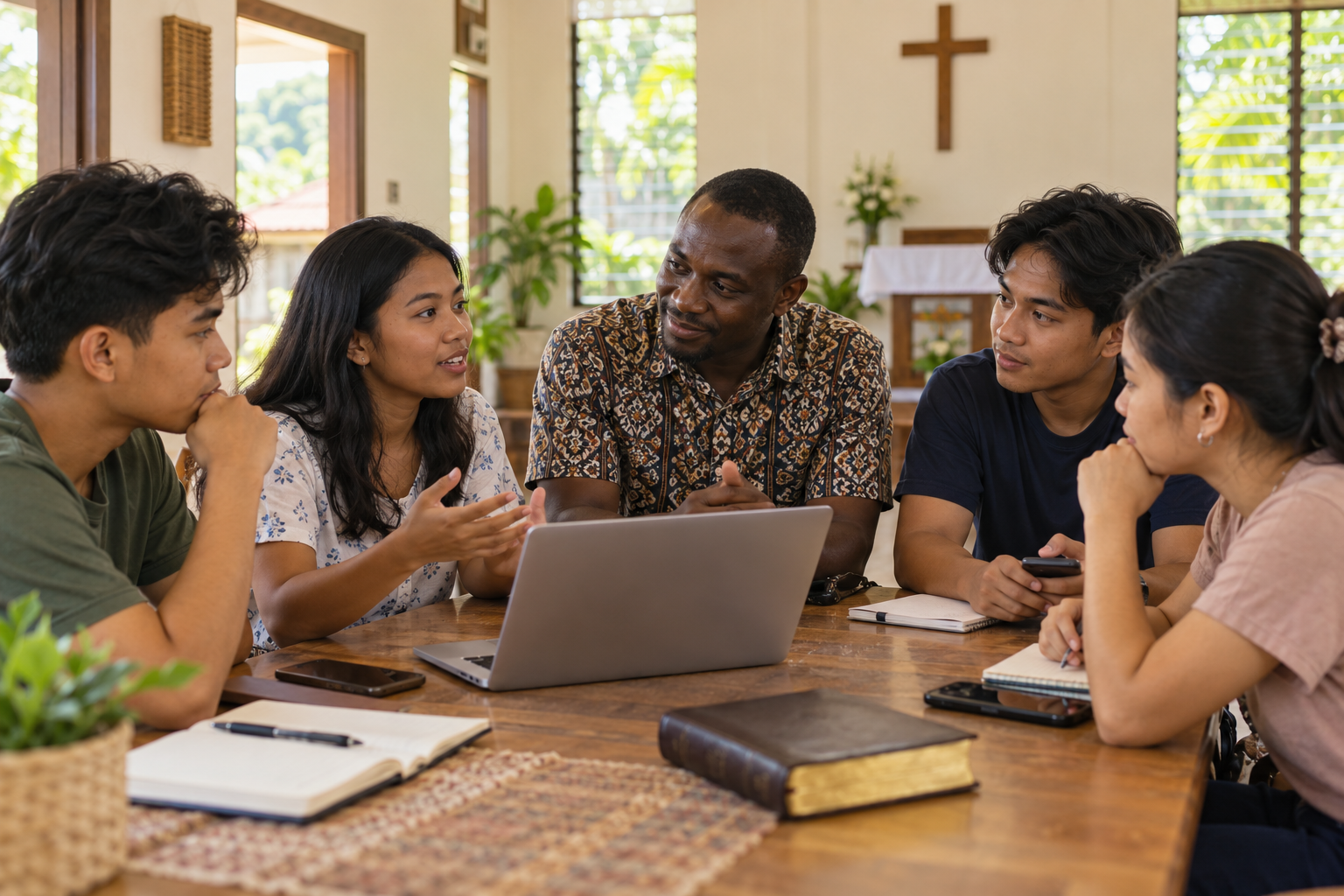
The mission field is no longer only a village, school, market, prison, church building, or city street. It is also the small screen that people carry in their hands. Across Southeast Asia, millions of people use social media to learn, talk, search for answers, and express their deepest fears. If people are online, Christian mission must learn how to be present there with wisdom.
This question is receiving new attention. In September 2026, more than 100 digital missionaries, communicators, content creators, and Christian leaders from across Asia gathered in Metro Manila for the first Asian Catholic Digital Missionary Assembly. Their theme challenged participants to move from being influencers to becoming witnesses. The words are important for every Christian tradition. Online mission should not be mainly about becoming famous. It should be about making Christ known.
At the same time, Southeast Asian governments and families are asking serious questions about online safety. On October 12, the Philippine House of Representatives approved a proposal to restrict social-media access for children under 13. Malaysia and Indonesia have also introduced stronger rules for younger users. These developments show that digital spaces offer great opportunities, but they also carry real risks.
How, then, can churches share the Gospel online while protecting people, especially children and young adults? The answer begins by remembering that technology is only a tool. The mission still belongs to God, the message is still Jesus Christ, and the goal is still transformed lives within a healthy Christian community.
Be a witness, not only an influencer
An influencer tries to gain attention. A Christian witness uses attention responsibly. Online numbers can become very attractive. Views, likes, followers, shares, and comments may help us understand how far a message travels, but they cannot tell us whether a person is growing in faith.
A video may receive thousands of views but leave people with little understanding of the Gospel. A simple message may reach only a few people yet begin a serious conversation, lead someone to prayer, or connect a family with a local church. Digital missionaries must therefore ask more than, “Did this post perform well?” We should also ask, “Was it true? Was it loving? Did it point people toward Jesus? Did it help anyone take a faithful next step?”
Christian content should not use fear, anger, shame, or false promises to attract attention. It should not exaggerate miracles or turn another person’s suffering into entertainment. A witness speaks honestly, gives glory to God, and protects the dignity of the people whose stories are shared.
Online reach must lead to real discipleship
Digital content can open a door, but discipleship usually grows through relationships. People need more than short inspirational videos. They need Scripture, prayer, patient teaching, wise correction, fellowship, and examples of faithful Christian living.
Every church that begins an online ministry should prepare a clear path for follow-up. When someone asks for prayer, who will respond? When a viewer wants to understand salvation, where can that person receive biblical teaching? When someone is ready to join a fellowship, is there a trusted local church or small group nearby?
A helpful digital mission plan moves people from content to conversation, from conversation to community, and from community to discipleship. This does not mean forcing every viewer to attend an event. It means offering safe and appropriate next steps. Online Bible studies, prayer groups, pastoral conversations, local-church introductions, and discipleship resources can help turn brief attention into lasting growth.
Protect children and vulnerable people
The current discussion about young people and social media should make churches more careful. Children should never be used as attractive content without proper consent and protection. A ministry should obtain permission before posting identifiable photographs or testimonies. Leaders should avoid sharing a child’s full name, exact location, school, personal struggles, or other information that could place the child at risk.
Private online conversations also require strong boundaries. Adults should not conduct secret, unaccountable chats with minors. Churches need written safeguarding rules, approved communication channels, parental involvement, and more than one responsible adult overseeing youth ministry. Prayer requests involving abuse, self-harm, exploitation, or immediate danger should be handled by trained leaders and referred to appropriate professional or emergency help.
Safety also includes truth. Digital missionaries should check facts before sharing news, photographs, statistics, or testimonies. False information can spread quickly, even when the person sharing it has good intentions. Correcting an error openly is not a sign of weakness. It is part of Christian integrity.
Speak the language of the people
Southeast Asia is rich in languages and cultures. English can reach many people, but it does not reach every heart equally. Churches can strengthen digital mission by creating content in Tagalog, Cebuano, Bahasa Indonesia, Thai, Khmer, Vietnamese, Burmese, and other local languages. Translation should sound natural, not mechanical, and local believers should review the message.
Cultural wisdom is just as important as language. Humor, images, gestures, family relationships, and religious words may carry different meanings from one community to another. Missionaries from outside the culture should create content with local Christians, not only for them. Local partnership helps prevent misunderstanding and makes the message more trustworthy.
Short videos, testimonies, questions and answers, Bible readings, and prayer messages can all be useful. Yet the format should serve the message. The aim is not to copy every online trend. It is to communicate Christ clearly in a way people can understand.
Build a ministry that can be trusted
A trustworthy digital ministry has clear leadership and accountability. Team members should know who approves content, who answers sensitive messages, how personal information is protected, and what should never be posted. Financial appeals should explain how gifts will be used. Testimonies should be shared with permission. Photos from outreaches should honor people instead of presenting them as objects of pity.
Churches should also care for the spiritual health of their content creators. Constant posting can produce exhaustion, comparison, pride, and dependence on public approval. Digital missionaries need prayer, rest, fellowship, and leaders who care about their souls more than their output. The hidden life with God must remain stronger than the public profile.
The screen can become a doorway
Digital mission will not replace street evangelism, church planting, pastoral care, or face-to-face discipleship. It can, however, become a doorway. A young person who would never enter a church may first ask a question through a private message. A migrant worker may join an online Bible study far from home. A pastor in a remote community may receive training through a mobile phone. A family facing crisis may discover that a local church is ready to listen and pray.
The Church should enter this mission field with courage and care. Let us create content that is truthful, safe, culturally respectful, and centered on Jesus. Let us measure fruit not only by attention, but by faithfulness, relationships, and lives becoming rooted in Christ. In a noisy digital world, a humble and trustworthy Christian witness can still shine brightly.
Further reading: Vatican News on the Asian Digital Missionary Assembly and Reuters on current Southeast Asian youth online-safety measures.
Help us share hope wisely
Pray with us, contribute your media skills, or partner with SendUsAll as we connect digital outreach with local churches and real discipleship.
Contact SendUsAll