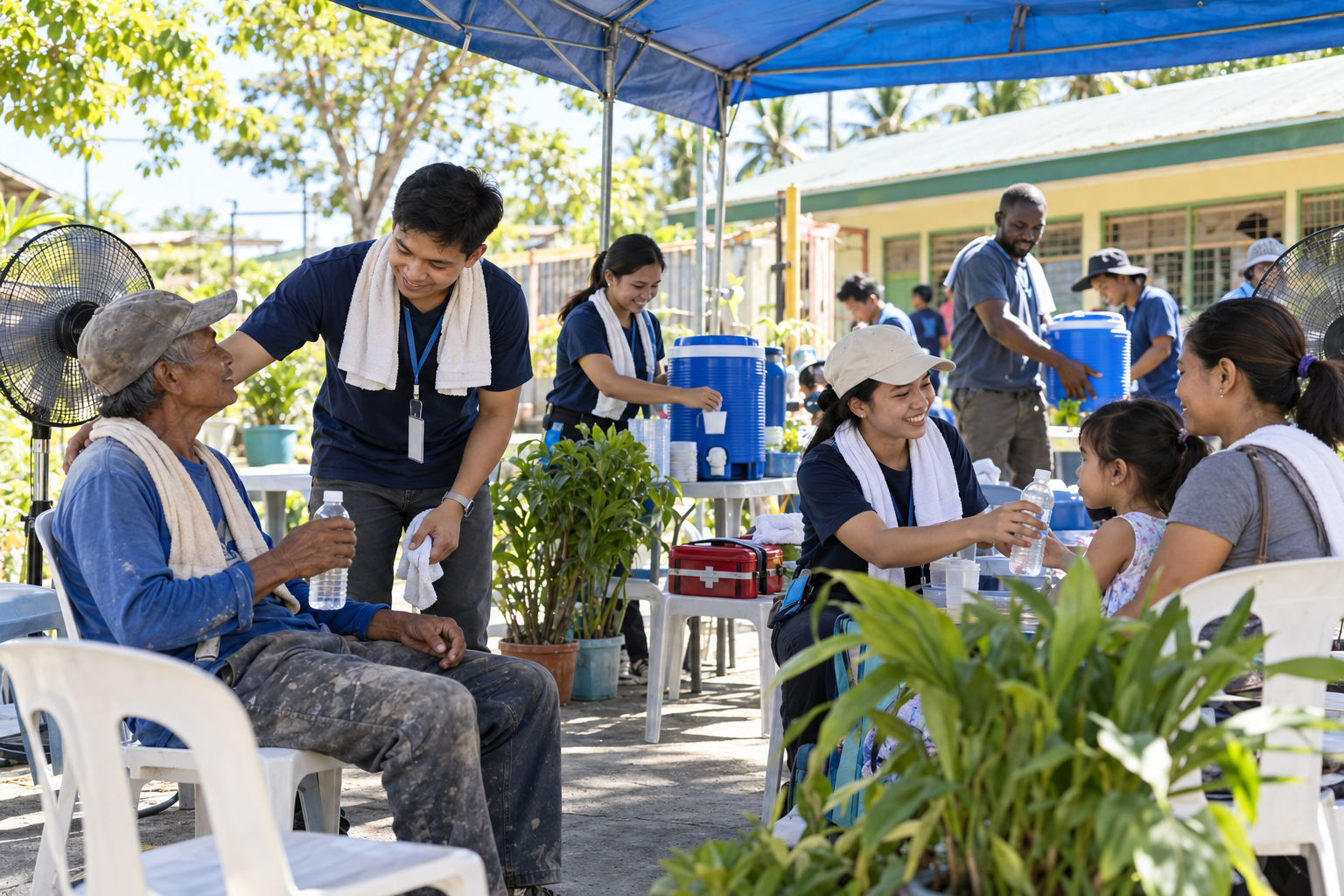
A church outreach can have a good purpose and still become unsafe when the heat is severe. A long queue in the sun, an afternoon sports program, a crowded worship hall, or hours of street ministry can place children, older people, outdoor workers, volunteers, and people with health conditions at risk. Loving our neighbor includes changing our plans when the weather becomes dangerous.
Extreme heat is receiving new global attention. A Reuters investigation published on October 20, 2026 describes enormous, long-lasting “heat storms” that are becoming more common as the climate warms. Tropical islands are especially exposed because warm seas, intense sun, and high humidity combine. The report recalls Filipino students fainting in overheated classrooms and shows that dangerous heat is no longer limited to a few unusually hot afternoons.
The Philippines already uses the heat index to describe what the temperature feels like when humidity is included. PAGASA classifies 33–41°C as “extreme caution” and 42–51°C as “danger.” Churches should follow the latest local forecast rather than assuming that a familiar season will behave normally. Heat safety is not fear. It is wise stewardship of life.
Heat is a ministry issue
Extreme heat affects worship, evangelism, feeding programs, construction work, youth activities, home visits, disaster response, and short-term mission trips. It also affects the people churches hope to serve. Farmers, street vendors, delivery riders, drivers, construction workers, waste collectors, security guards, and market workers may arrive at church already exhausted from hours outside.
Heat risk is not shared equally. People with less money may live in crowded homes with metal roofs, poor ventilation, unreliable electricity, or limited water. Some cannot stop working during the hottest hours. Children heat up more quickly, while older adults may not notice thirst as easily. Pregnant women, infants, people with disabilities, and those with heart, kidney, lung, or other health conditions may need additional care.
A church should therefore ask more than, “Can our program continue?” It should ask, “Who carries the greatest risk if it continues in this form?” A schedule that is tolerable for a healthy leader may be dangerous for a child, an elderly member, or a volunteer taking medication.
Check reliable information before every activity
Assign one leader to check PAGASA's current heat-index information and local government advisories before outdoor events. Do this again on the day of the activity because conditions can change. Avoid forwarding screenshots with no date, place, or official source.
Use simple thresholds in the ministry plan. When heat reaches a dangerous level, move the program indoors, shorten it, reschedule it to early morning or later afternoon, or cancel it. The decision should be made before participants travel whenever possible. Tell parents, volunteers, drivers, and partner churches clearly.
Short-term mission teams must follow local guidance. Visitors from cooler climates may underestimate humid heat, while enthusiastic team members may ignore symptoms because they do not want to disappoint supporters. Local hosts should have authority to slow, change, or stop the schedule.
Change the time, pace, and place
The safest heat response is often to reduce exposure. Hold prayer walks, sports, street evangelism, construction, and distributions during cooler hours. Build rest breaks into the schedule rather than waiting for someone to feel ill. Rotate volunteers so the same people are not carrying supplies or standing in the sun for hours.
Shade must cover people, not only equipment. Use trees, covered halls, tents secured safely, umbrellas, or awnings. Check whether a metal-roofed room is actually cooler than outdoors; some enclosed spaces trap heat. Open windows and doors when safe, use fans where electricity allows, and reduce crowding.
Provide enough seating. A person who is tired, dizzy, pregnant, elderly, or carrying a child should not have to stand in a long line. Numbered cards or staggered distribution times can reduce waiting. Ministry should never require people to endure unsafe heat to receive food, prayer, documents, or assistance.
Make safe drinking water easy to reach
Place drinking water in visible, shaded locations. Volunteers should know where refills are available and remind people to drink regularly. Use clean containers and cups, protect water from contamination, and provide a safe way to dispose of or wash reusable cups.
Do not rely only on very sweet drinks, energy drinks, or coffee. People working for long periods may need guidance from health professionals about hydration and electrolytes, especially if they have medical conditions. Churches should avoid giving one medical instruction to everyone.
Water ministry also includes dignity. Outdoor workers may hesitate to enter a church building in dirty work clothes. A shaded water point near the entrance can say, “You are welcome here.” Ask nearby drivers, guards, vendors, and construction workers what would genuinely help rather than designing the station only for publicity.
Learn early warning signs
Heat illness can begin with heavy sweating, thirst, headache, dizziness, weakness, nausea, cramps, irritability, or unusual tiredness. A person should stop activity, move to a cooler place, rest, and receive appropriate help. Do not shame someone for being “weak,” and do not tell them to push through for the sake of the ministry.
Confusion, collapse, seizures, or not responding normally are danger signs and may indicate heatstroke, a medical emergency. Call local emergency medical services immediately and begin rapid cooling while help is coming, following trained guidance. Move the person out of the heat, remove unnecessary outer clothing, and use cool water, wet cloths, fans, or available safe cooling methods.
Do not force fluids into someone who is confused, having a seizure, vomiting repeatedly, or unconscious. Do not leave the person alone or assume prayer replaces emergency treatment. Pray while qualified medical help is contacted and practical cooling begins.
Train a small heat-safety team
Every large church activity should identify who will monitor the weather, water, rest area, attendance, first-aid supplies, transport, and emergency contacts. At least some volunteers should have recognized first-aid training. Display emergency numbers where leaders can find them quickly.
Before the program, explain the plan in a short briefing. Volunteers should know that they may pause an activity when someone appears unwell. Children should know which adult to approach. Parents should understand where the cool area and water station are located.
After the event, record any heat-related incidents without publicly naming affected people. Ask what worked and what failed. Did water run out? Was the shade too small? Did leaders dismiss symptoms? Use the answers to improve the next event.
Protect children and young people
UNICEF reports that extreme heat is already closing schools and reducing children's ability to learn in the Philippines. Rural, coastal, Indigenous, and low-income learners can face greater disruption. Churches that run tutorials, camps, Vacation Bible School, sports, or youth rallies must plan for this reality.
Do not schedule intense games at the hottest time of day. Give children frequent water and rest without making them ask repeatedly. Watch younger children closely because they may not explain symptoms well. Never use exercise, standing in the sun, or withholding water as discipline.
Get accurate parent or guardian contact details and relevant health information through a secure process. Leaders should know which children need medication or special support, but private information must not be shared casually in group chats.
Care for outdoor and informal workers
The International Labour Organization warns that excessive heat especially affects people working outdoors or in poorly ventilated spaces. Many exposures and heat-related injuries occur even outside officially declared heatwaves. Workers may continue because missing one day means losing food, rent, or transport money.
Churches can listen to workers and advocate for shade, drinking water, rest breaks, safer hours, and respectful treatment. Employers within the congregation should lead by example. A Christian business should not preach compassion on Sunday while pressuring workers to remain in dangerous heat without protection.
Practical ministries might offer refill stations, shaded rest areas, basic heat-safety information from official sources, or connections to health services. Assistance should be free from pressure to attend worship or disclose personal stories.
Design church buildings for a hotter future
Not every congregation can install air-conditioning, and air-conditioning alone is not a complete answer. Churches can assess roof insulation, reflective roofing, ceiling height, cross-ventilation, shade trees, window placement, fans, safe drinking-water access, and the number of people a room can hold comfortably.
Low-cost improvements may include curtains or exterior shade on sun-facing walls, lighter roof coatings where appropriate, roof vents installed by qualified workers, shaded waiting areas, and maintenance of fans and electrical systems. Planting trees can help over time, but species and locations should be chosen carefully so roots, falling branches, or storm winds do not create new hazards.
New construction and renovation should include local engineers, builders, health professionals, people with disabilities, women, and community members. A beautiful sanctuary that becomes dangerously hot is not serving its people well.
Make compassion visible without turning people into content
A heat-relief activity can be shared to encourage others, but do not photograph people while they are sick, exhausted, or receiving care without informed permission. Children need particular protection. A staged picture of a volunteer handing water to a vulnerable person may promote the organization more than the person's dignity.
Report what was provided, what was learned, and what the community still needs. Credit local volunteers and partners. Share official heat information. Let the story focus on preparedness and neighbor love, not on presenting the church as a hero.
Creation care and Gospel witness belong together
Heat ministry responds to an immediate health risk, but it also invites deeper Christian reflection. Caring for creation, reducing waste, protecting trees, using energy wisely, and supporting climate-resilient communities are not distractions from mission. They are ways of loving the people whose lives are affected first and worst.
The church cannot control the climate, but it can control whether its own programs ignore warnings or protect people. It can choose shade over spectacle, rest over pressure, accurate information over rumors, and compassion over a rigid schedule.
Sometimes mission looks like preaching beneath a tent. On a dangerously hot day, mission may first mean making sure the tent provides real shade, the water is clean, the children can rest, the workers are safe, and the person who feels dizzy is taken seriously. That is not less spiritual. It is love made practical.
Further reading: PAGASA's heat-index information, UNICEF's 2026 brief on children, extreme heat, and climate action, the ILO's guidance on occupational heat exposure, and WHO guidance on recognizing and managing heat-related illness.
Help your church prepare before the next hot day
Ask SendUsAll about locally led outreach, volunteer preparation, or practical community care in the Philippines.
Contact SendUsAll