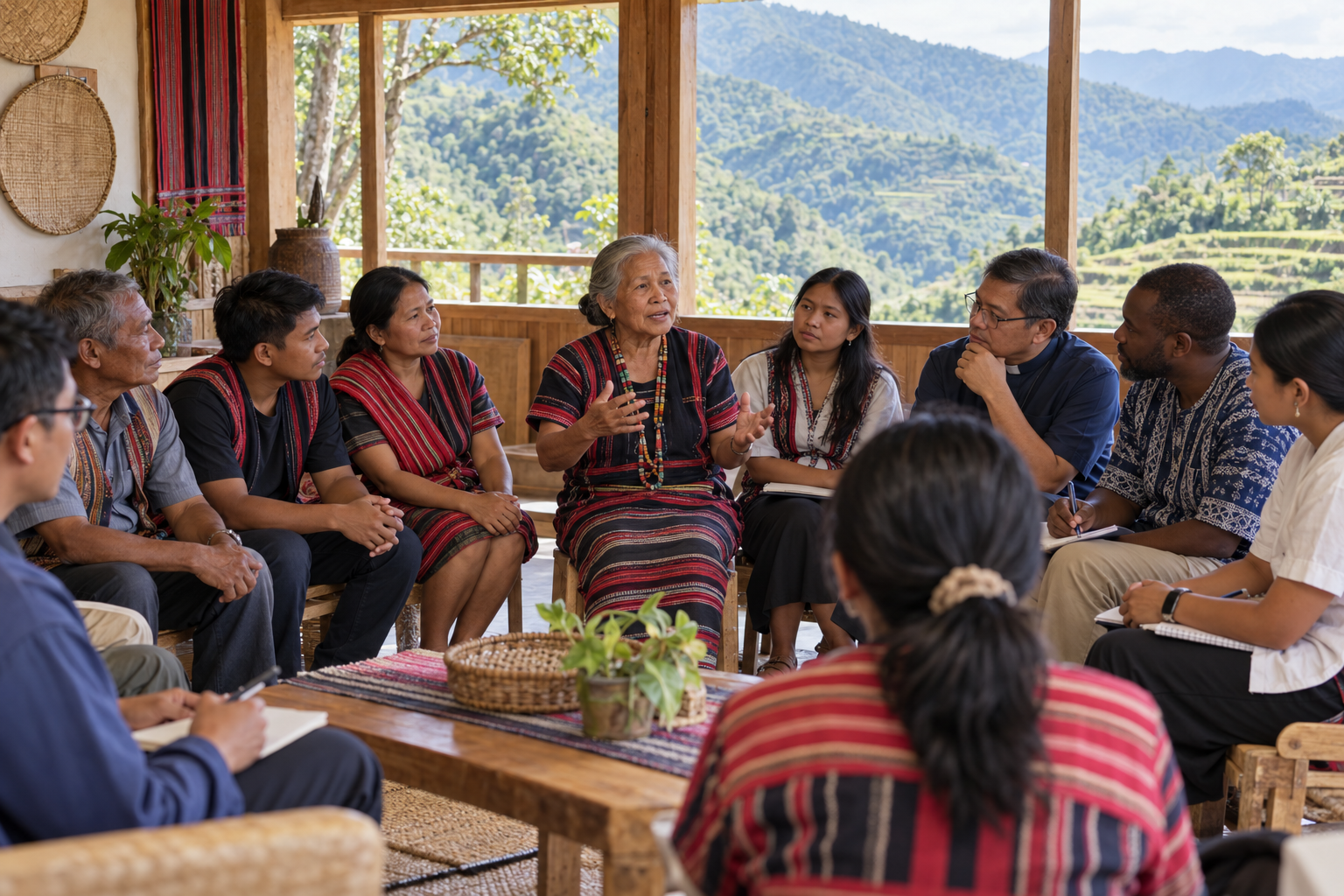
A mission team can arrive with energy, money, plans, and sincere love for God. Yet if the team has not first listened to the people it hopes to serve, even good intentions can cause harm. Among Indigenous communities, respectful mission begins by recognizing that the community already has leaders, knowledge, history, faith questions, and the right to shape its own future.
This truth is especially timely in the Philippines. October is National Indigenous Peoples Month, and this year's theme highlights rights, culture, and ancestral domains. On October 22, ASEAN is also scheduled to open a high-level meeting in Metro Manila on the rights, dignity, and empowerment of Indigenous Peoples and other vulnerable communities. These events invite churches to examine not only where they serve, but how they serve.
The Philippines is home to many distinct Indigenous Cultural Communities. Across Southeast Asia, Indigenous Peoples speak different languages, hold different histories, and have different relationships with land and government. They are not one group, and they should never be treated as a single mission category. A method that is appropriate in one community may be disrespectful or unlawful in another.
See people as leaders, not projects
Mission reports sometimes describe communities only through what they lack: roads, schools, clinics, money, or churches. These needs may be real, but they are not the whole story. Indigenous communities also carry deep knowledge of land, farming, forests, healing, peacebuilding, family, art, language, and community life. People are not empty containers waiting for outsiders to bring value.
A respectful mission team asks who the recognized community leaders are and how decisions are made. Leadership may include elders, women, youth, faith leaders, councils, and customary authorities. The team should not choose one convenient person and assume that person speaks for everyone.
Local believers should lead the spiritual work wherever possible. Visiting missionaries can encourage, teach when invited, share resources, and build relationships. They should not push Indigenous Christians aside simply because outsiders have more education, money, equipment, or public speaking experience.
Ask before planning
A common mistake is to design a project far away and present it to a community as a finished gift. The project may answer a need that outsiders imagined rather than the need residents identified. It may also interrupt local work, create conflict, or leave equipment that nobody can maintain.
Begin with questions. What does the community consider most important? What work is already happening? What have earlier organizations promised or failed to do? Who may benefit, and who may carry the cost? How will the project continue after the visiting team leaves?
Listening is more than one meeting. People may need time to discuss an idea in their own language and through their own decision-making process. Silence does not automatically mean agreement. Politeness does not always mean consent. A community must be free to say no without losing friendship, pastoral care, or other assistance.
Understand free, prior, and informed consent
The principle of free, prior, and informed consent, often called FPIC, is important when an activity may affect Indigenous Peoples, their lands, resources, culture, or knowledge. “Free” means without pressure, manipulation, or punishment. “Prior” means the conversation happens before decisions are final. “Informed” means people receive clear and complete information in a form they understand. “Consent” means the community can accept, reject, or negotiate the proposal through its legitimate process.
Mission teams are not excused from this principle because their work is religious or charitable. Permission from a government office, landowner, pastor, donor, or tour organizer may not be enough. Teams should follow Philippine law, National Commission on Indigenous Peoples guidance, and the community's own decision-making process.
FPIC is not a form to sign at the last minute. It is a relationship of honesty and respect. If plans change, the community should be told and consulted again. Good mission work does not fear meaningful consent.
Respect culture without romanticizing it
Cultural humility does not mean declaring every custom good or refusing all honest Christian conversation. It means approaching people as equals, learning before judging, and recognizing that every culture—including the missionary's culture—contains beauty, brokenness, and human limitation.
Missionaries should avoid calling traditional clothing, music, art, or language “backward.” They should also avoid turning culture into entertainment for visitors. Sacred objects, ceremonies, graves, and private spaces require special care. Some knowledge is not meant to be photographed, recorded, copied, preached about, or posted online.
The Gospel can be shared without demanding that people adopt foreign dress, worship styles, names, food, or social habits. Revelation 7:9 presents people from every nation, tribe, people, and language before God's throne. Cultural difference is not a problem that heaven must erase.
Protect language and communicate clearly
Language carries memory, identity, and a way of seeing the world. Whenever possible, churches should work with trusted local translators and support ministry in the language people understand best. Translation is not only replacing words. Christian terms may carry different meanings, and careless language can create confusion.
Allow local believers to explain Scripture through examples that make sense in their community. Ask whether teaching materials fit the context. Make room for oral storytelling, music, conversation, and other learning styles rather than assuming that a written seminar is always best.
Teams should pay translators fairly and recognize their spiritual and intellectual contribution. A translator is not a machine or a background helper. Often, this person protects the relationship from serious misunderstanding.
Use photographs and stories with consent
Images can help supporters understand a ministry, but they can also take dignity away. Do not photograph children, elders, homes, ceremonies, medical needs, or sacred places simply because they look powerful. Ask before taking the photograph and again before publishing it. Explain where it will appear, who may see it, and how long it may remain online.
A person who accepts food, prayer, medicine, school supplies, or pastoral care must never feel required to pose for a camera. Consent to participate in an activity is not consent to fundraising publicity. Avoid captions that portray the missionary as a hero and the community as helpless.
Stories also belong to people. Change identifying details when privacy is needed. Do not publish trauma, family conflict, conversion, or traditional knowledge without clear permission. If a community later asks for content to be removed, respond with humility.
Keep money from controlling the relationship
Outside funding can create an unhealthy balance of power. People may agree with the donor because they fear losing a project. Local leaders may compete for access to resources. A ministry can unintentionally make the community dependent on visits and gifts.
Discuss budgets openly with appropriate community representatives. Agree on responsibilities, ownership, maintenance, and reporting. Buy locally when practical, pay people fairly, and avoid gifts that weaken existing livelihoods. Do not connect material help to baptism, church membership, political support, or public praise.
Long-term partnership is usually more valuable than one impressive event. If a short-term team visits, it should serve a locally defined purpose within an ongoing relationship. The community should not have to repeat its story and needs to a new group every few months.
Stand with communities in practical ways
Respectful mission includes spiritual ministry and practical solidarity. Churches can support education chosen by the community, health referrals, disaster preparedness, livelihood initiatives, legal awareness, language preservation, and care for creation. They can amplify Indigenous voices without speaking over them.
Land is especially important. For many Indigenous Peoples, ancestral domain is connected to livelihood, identity, memory, worship, and responsibility to future generations. A mission project should never help outsiders gain land, resources, photographs, data, or cultural knowledge through pressure or confusion.
When conflict arises, missionaries should not make promises beyond their authority or present themselves as legal experts. They can listen, pray, document concerns only with permission, and connect the community with qualified services such as the NCIP, Commission on Human Rights, trusted legal organizations, or local authorities.
Let mission become mutual
Cross-cultural mission is not a one-way journey in which one group has all the truth, knowledge, and gifts. The Gospel is God's gift, but every Christian community also has something to teach the wider Church. Indigenous believers may reveal new depths of stewardship, community, endurance, prayer, hospitality, and relationship with creation.
Missionaries need the humility to be guests and learners. They should ask local Christians to correct them. They should be willing to change a plan, slow a schedule, share leadership, or leave a task undone when the community has not agreed.
Jesus did not treat people as ministry statistics. He saw, heard, questioned, and restored dignity. When churches serve Indigenous communities with the same attention, mission becomes more truthful. It is no longer something done to people. It becomes a partnership in which the love of Christ is shared through listening, consent, justice, and faithful presence.
Further reading: the Philippine Commission on Human Rights' October 2 statement for Indigenous Peoples Month; the National Commission on Indigenous Peoples' 2026 commemoration; and the United Nations guide to free, prior, and informed consent.
Serve through respectful partnership
Pray with SendUsAll, support locally led ministry, or ask how your mission team can prepare for culturally respectful service in the Philippines.
Contact SendUsAll