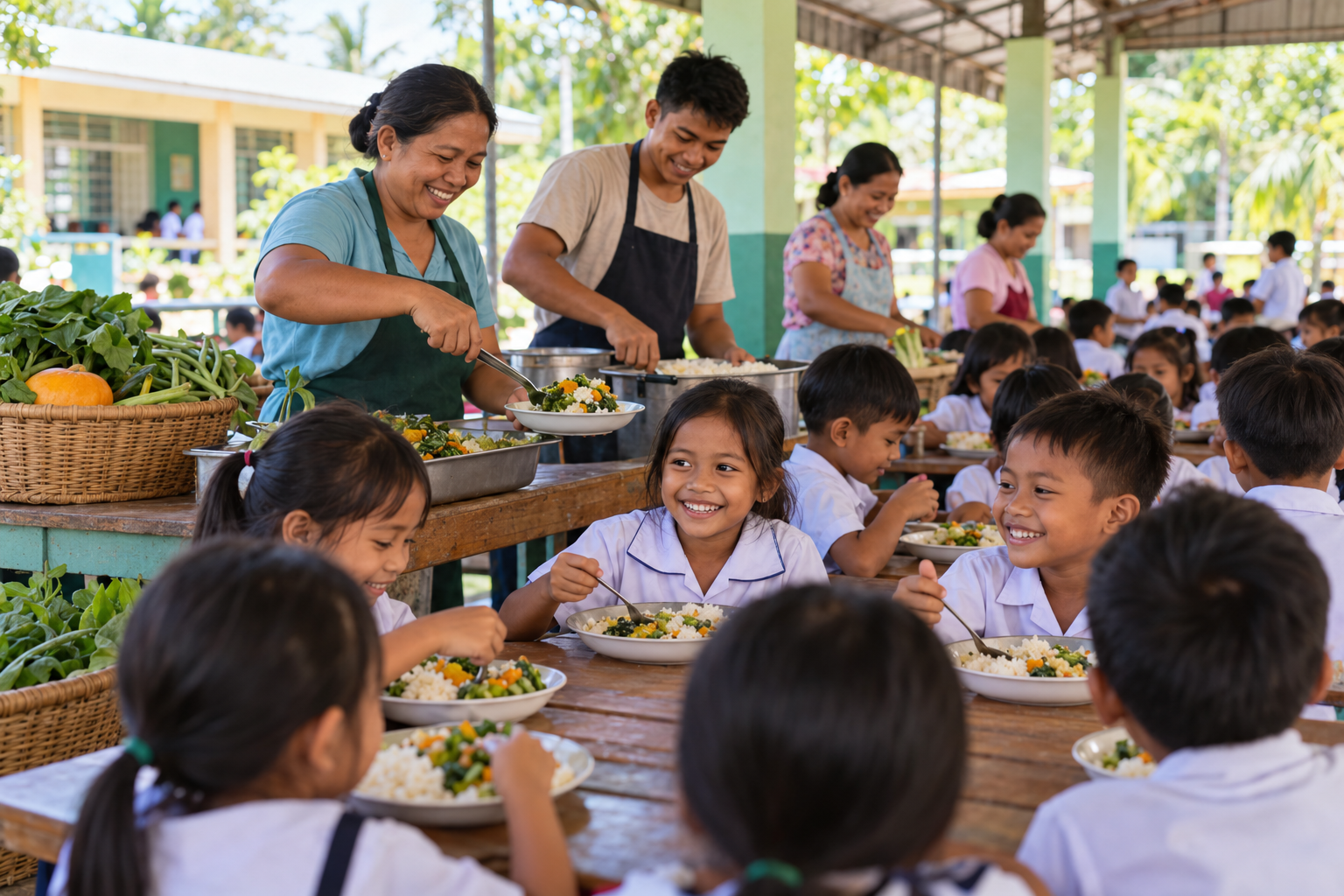
A bowl of rice, vegetables, egg, fish, or monggo may look like a simple lunch. For a child who arrived at school hungry, it can mean enough energy to listen, read, play, and finish the day. For a parent, it can bring relief. For a nearby farmer, a school food order can create dependable income. A good meal reaches farther than the plate.
School meals are receiving fresh attention across Southeast Asia. On October 19–20, researchers and government representatives met in Phnom Penh, Cambodia, to review school meal programs across ASEAN countries and help shape a regional action roadmap. The workshop, reported by the Southeast Asian Regional Center for Graduate Study and Research in Agriculture on October 29, brought together 72 participants from governments, the World Food Programme, ASEAN, and other partners.
The Philippines is also expanding its School-Based Feeding Program in 2026. The Department of Education says about 4.6 million learners are expected to benefit, including children in the earliest grades and older learners who face nutritional risk. These are public programs with professional standards and public accountability. Churches should not try to take them over. But churches can become trustworthy partners when schools and communities invite their help.
Hunger affects the whole school day
A hungry child may be tired, irritable, embarrassed, or unable to concentrate. A teacher may see poor participation without knowing that the child did not eat breakfast. Repeated hunger can affect attendance, health, learning, and a young person's sense of safety.
Mission responds to the whole person. Jesus welcomed children, fed crowds, and treated physical need as worthy of attention. Serving food is not separate from Christian witness when it grows from love. Yet love must be wise. A meal prepared with good intentions can still cause harm if it is unsafe, nutritionally weak, culturally unfamiliar, or distributed in a way that humiliates children.
The first ministry task is therefore to listen. Ask the school head, teachers, parent leaders, local health workers, and government feeding coordinators what program already exists. Ask where the real gaps are. The answer may not be “bring more food.” A school might need clean water, handwashing stations, cooking equipment, storage containers, transport, volunteer training, or help connecting with local farmers.
Support the system instead of building a rival one
Churches sometimes begin a feeding project quickly because the need is visible. But an independent program can accidentally duplicate meals for some children while missing others. It can also burden teachers with extra lists, create confusion about food standards, or end suddenly when donations fall.
A better approach starts with a written partnership. Clarify who selects participants, approves menus, purchases food, checks kitchens, records deliveries, supervises volunteers, and responds to illness. Follow school policies and the Department of Education's feeding guidelines. If the church is not an authorized implementing partner, it can support an approved partner rather than operating alone.
Government must remain responsible for public education and nutrition. Church donations should strengthen access and quality, not become an excuse to reduce public funding. Quiet support for a durable local program is better than a highly publicized project that disappears after one season.
Never make food depend on religious participation
Food must never be exchanged for attendance at worship, Bible study, prayer, baptism, or evangelistic meetings. Children cannot give free consent when a meal they need is tied to a religious activity. This is especially important in public schools and in communities where families follow different faiths.
Christian volunteers can explain honestly who they are and why they serve. They can pray privately for the children and offer spiritual care when it is requested and permitted. But every eligible child should receive the same welcome, portion, respect, and protection whatever the family's belief.
This does not weaken mission. It makes love credible. Grace is a gift, not a sales method. When a church serves without pressure, families can see that Christians value their children as neighbors, not as targets.
Plan meals with nutrition professionals
A full stomach is not always a nourished body. Meals need a thoughtful balance of energy, protein, vegetables, fruit when available, and important vitamins and minerals. Menus should fit the age of the children, local eating patterns, and the health guidance of the program.
Do not design a menu from social media posts or donor preference. Work with school nutrition staff, local health offices, registered nutritionist-dietitians, or the approved feeding program. Consider anemia, undernutrition, disability, pregnancy among adolescent learners, and other needs without labeling children publicly.
Ask about allergies and medically required diets. Keep an accurate list where authorized staff can access it, but protect the child's privacy. Volunteers must know what to do if a child develops swelling, difficulty breathing, vomiting, or another serious reaction. Emergency contact and referral procedures should be settled before the first serving day.
Food safety is part of safeguarding
Children can become seriously ill when food is stored at unsafe temperatures, water is contaminated, hands are unwashed, or cooked and raw ingredients share the same equipment. A ministry kitchen needs more than generous cooks. It needs trained people, clean water, safe storage, pest control, working thermometers where required, and clear routines.
Volunteers who are sick should not prepare or serve food. Hair should be secured, hands washed correctly, surfaces cleaned, and ingredients checked for spoilage and expiry. Meals should be transported in food-safe containers and served within the approved time. Leftovers should be handled according to the program's rules, not casually taken home after sitting in the heat.
Keep simple records of suppliers, delivery dates, menus, and incidents. If several children become ill, report it immediately through the school's health and local government channels. Do not hide a problem to protect the church's reputation. Truthful reporting protects children and helps professionals find the cause.
Buy locally when it is safe and practical
Home-grown school feeding connects children's meals with nearby farms and food producers. The World Food Programme has supported Philippine pilots in Isabela and the Bangsamoro region where local smallholder farmers supply nutritious ingredients. This model can keep more of the food budget within the community while improving freshness and building a more dependable market for farmers.
Churches may help farmers understand school purchasing requirements, organize deliveries, obtain safe containers, or coordinate transport. They can encourage women farmers, Indigenous producers, fisherfolk, and small cooperatives to participate fairly when they meet the standards.
Local purchasing still needs transparent prices and records. Ministry leaders should not direct contracts to relatives or church members without a fair process. Separate purchasing approval, receiving, and payment when possible. Publish simple reports to the school and partner community so people know how funds were used.
Protect dignity at every table
No child should be called “the hungry one,” photographed while eating without proper permission, or required to tell a painful family story to receive lunch. Avoid separate lines that mark children as poor. Where the official program targets particular learners, distribute meals as discreetly and normally as the school allows.
Ask both the school and parents or guardians before taking photographs. A parent's permission does not automatically make every image wise to publish. Do not use close-up images of distressed children for fundraising. Never post names, health measurements, family income, or school records.
Children should also have a voice. Ask whether the food tastes familiar, whether serving times work, whether younger pupils need help, and whether any child is being teased. Their feedback can improve the program and teach adults to see them as participants, not passive recipients.
Include children who are often overlooked
A feeding program should plan for children with disabilities. Can a child using a wheelchair reach the dining area? Are tables at a useful height? Does a child need adapted utensils, help carrying a tray, softer food, more time, or a quieter place? Ask the child and caregiver rather than guessing.
Consider learners in remote and last-mile schools, Indigenous communities, temporary shelters, and alternative learning programs. Language matters too: food-safety instructions and allergy questions should be explained in words families understand.
In areas affected by storms, drought, conflict, or displacement, school meals may be interrupted just when families need them most. Churches can help approved coordinators prepare continuity plans, emergency stocks, or safe alternative distribution. This work should fit government disaster and safeguarding systems, not operate outside them.
Care for the people doing the work
Feeding programs often depend on the unpaid labor of mothers, teachers, and women volunteers. Their work can become invisible. A sustainable ministry budgets for transport, protective equipment, training, childcare where appropriate, and fair payment when a role is really a job.
Share responsibilities with men and young adults rather than assuming women will cook and clean. Use schedules that prevent exhaustion. Provide safe ways to report harassment, financial concerns, unsafe food, or poor treatment. Every adult working near children should follow the school's child-protection requirements.
Volunteers also need realistic spiritual care. Serving hundreds of meals can be joyful and tiring. Begin with clear roles, not only enthusiasm. Debrief problems honestly, celebrate steady faithfulness, and allow people to rest.
Measure what matters
Success is not the number of photos posted or plates served on launch day. The school and health authorities may track attendance, meal quality, program coverage, safe delivery, and nutritional outcomes using approved methods. Churches should contribute accurate records without collecting more personal data than necessary.
Ask practical questions: Were meals delivered on time? Did children eat them? Were there safety incidents? Did costs stay within budget? Did local suppliers receive fair and timely payment? Were children with disabilities included? Did the program continue during difficult weeks?
Listen for unintended effects. A donated snack may create plastic waste. A menu may ignore local tastes. A short-term project may take customers away from a small school canteen. Honest evaluation helps the partnership change course before a small problem becomes a large one.
A table of shared hope
The October regional workshop in Cambodia treated school meals not as occasional charity but as a long-term investment in children, education, food systems, and the future of Southeast Asia. That wider vision matters for mission.
A church can bring relationships that last beyond a grant: farmers known by name, parents who trust one another, volunteers who can notice when a family is struggling, and congregations willing to give quietly. It can advocate for good public programs, help fill approved gaps, and remind the community that every child carries God-given dignity.
The most faithful contribution may be ordinary: washing hands, recording a delivery correctly, buying vegetables fairly, serving equal portions, protecting a child's privacy, and returning next week. In those small acts, a school meal becomes more than food. It becomes a shared promise that children should be safe, nourished, welcomed, and ready to learn.
Further reading: SEARCA's report on the October 2026 regional school meals workshop and its ASEAN school meals landscape analysis; the Philippine Department of Education on the expanded 2026 School-Based Feeding Program; and the World Food Programme on home-grown school feeding in the Philippines.
Serve children through trusted local partnership
Ask SendUsAll about community ministry, church partnership, and practical ways to support families in the Philippines.
Contact SendUsAll