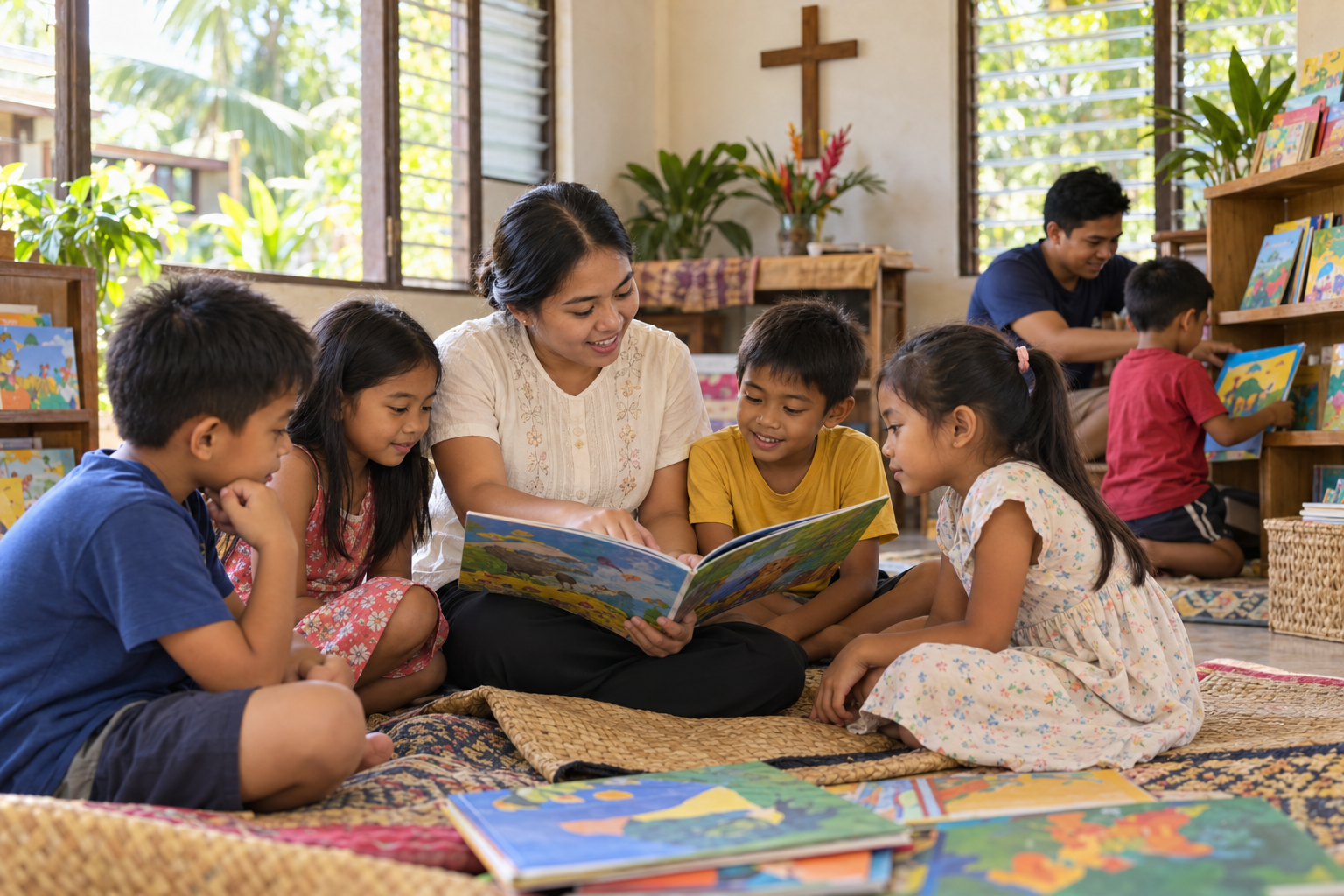
A child who struggles to read may become quiet when others open a book. The child may avoid answering, copy a classmate, misbehave, or say that reading is boring. Behind that behavior can be fear: fear of getting a word wrong, being laughed at, or disappointing an adult. A patient church can help replace that fear with safety, practice, and hope.
New figures from the Second Congressional Commission on Education show why this matters now. At the beginning of School Year 2026–2027, 48 percent of assessed learners in the Davao Region and 45 percent in Davao City were classified as struggling readers. Nationwide, the same assessment placed 45 percent of learners in the two lowest reading levels.
These numbers should not be used to shame children, parents, teachers, or a region. They describe a shared challenge that developed over many years. EDCOM 2 is calling for schools, local governments, universities, parents, and communities to work together. Churches are part of those communities. They have rooms, volunteers, relationships, local languages, and a calling to serve children with dignity.
Reading is a mission concern
Reading affects far more than a school grade. It helps a child understand instructions, explore science, manage money, recognize misinformation, apply for work, and participate confidently in society. It also helps people read Scripture for themselves rather than depending only on what another person says it means.
A literacy ministry must never make Bible reading a condition for receiving educational help. Children of every background should be welcome and respected. Christian service is most credible when help is offered freely, without pressure, manipulation, or hidden requirements.
Churches should also avoid presenting themselves as rescuers. Teachers and parents are already carrying heavy responsibilities. The church's role is to listen, cooperate, and strengthen good work that is already happening.
Begin with the school, not with a program poster
Before recruiting volunteers or collecting books, meet the local school head, reading coordinator, teachers, parent leaders, and barangay representatives. Ask what learners need, which ages require support, what language is most useful, when tutoring happens, and what materials are approved.
The Department of Education's Academic Recovery and Accessible Learning Program provides structured help in reading, science, and mathematics. Its 2026 guidance includes qualifications, screening, and responsibilities for tutors and support aides. A church should learn how its volunteers can support this system rather than creating a separate program that confuses children or adds work for teachers.
Agree in writing on roles, schedules, attendance, safeguarding, data privacy, and communication with parents. Decide who supervises instruction and who responds if a child discloses harm. Clear partnership protects children and volunteers.
Train tutors to teach, not to guess
Good intentions do not automatically produce good reading instruction. A volunteer who simply tells a child to “try harder” may increase shame. Tutors need training in how children connect sounds and letters, blend sounds into words, build vocabulary, read with fluency, and understand meaning.
Use methods recommended by the school and match instruction to the learner's assessed level. A child who is still learning letter sounds needs different help from a teenager who can read words but struggles to understand a paragraph. Do not give every learner the same worksheet.
Keep groups small enough for each child to read aloud without embarrassment. Model a word, let the child try, give a simple correction, and return to the word later. Praise careful effort and progress, not only speed. A calm thirty-minute session repeated consistently can be more helpful than a long, exhausting event.
Protect children from shame
Never call a child “slow,” “lazy,” or “illiterate.” Do not announce reading levels from the pulpit, post them in a group chat, or use before-and-after videos to promote the ministry. Learning information belongs to the child, parent or guardian, and authorized educators.
Older struggling readers need particular care. A Grade 8 or Grade 9 learner may already have years of painful experiences. Use age-respectful materials rather than books that look designed for toddlers. Offer private encouragement and avoid asking the learner to read publicly without consent.
Progress is not always a straight line. Davao City schools reported major improvement by the end of the previous school year, yet beginning-of-year results again showed many emerging readers. Skills can weaken when practice stops. This is a reason for sustained support, not a reason to blame children or dismiss earlier gains.
Build a safe reading space
A church reading room should be visible, welcoming, accessible, and accountable. Use open doors or windows, adequate lighting, child-sized seating, drinking water, and a clear sign-in process. At least two screened adults should be present. Parents should know who is responsible and when children are released.
Follow the church's child-protection policy and applicable school or local requirements. Volunteers should never take a child to an isolated room, communicate secretly through private accounts, or arrange unapproved transport. Photography requires informed permission, and choosing not to be photographed must never affect a child's access to tutoring.
Plan for children with disabilities. Large-print materials, clear audio, accessible seating, extra processing time, visual supports, or professional assessment may be needed. Ask the family and school what helps; do not diagnose a child from casual observation.
Put good books where children can reach them
Six in ten Filipino homes with young children have no children's books, according to data cited by EDCOM 2. The BOOKsan ang Kinabukasan campaign, developed with Caritas Philippines, is responding through community-managed reading boxes and reading nooks in parishes, chapels, schools, daycare centers, and barangay spaces.
A church can establish a small lending shelf, but book quality matters more than collecting a large pile. Choose sturdy, age-appropriate books with clear print, engaging stories, accurate information, and positive representations of Filipino children and communities. Include local-language and bilingual materials where appropriate.
Do not send damaged, outdated, or culturally inappropriate books to a community simply because donors no longer want them. Ask teachers and families what children enjoy. Record loans simply, replace lost books without humiliating families, and set aside a regular amount for new titles.
Use the languages children understand
Southeast Asia is rich in languages. A child may speak Cebuano, Filipino, an Indigenous language, or another home language before learning English. Familiar language can help a beginning reader connect print with ideas and build confidence.
Work with local educators on the right balance of home language, Filipino, and English. Do not treat a child's accent as a mistake or assume that English ability measures intelligence. Invite local storytellers, parents, and elders to share age-appropriate stories, riddles, songs, and oral histories, with permission and proper credit.
Bible materials should also be understandable. A beautifully printed text has limited value if its language is too difficult. Choose translations and explanations suited to the age and language of the group, while keeping educational tutoring open and non-coercive.
Help parents without blaming them
Many parents want to support reading but have limited time, money, confidence, or access to books. Some work long or irregular hours. Some did not receive strong reading instruction themselves. A ministry should begin with respect.
Offer short demonstrations: talk about the pictures, ask what might happen next, let the child retell the story, and read the same favorite book many times. Even a few minutes of warm, focused reading can build connection and language. Parents can tell stories orally when print materials are not available.
Make books easy to borrow after church or during community visits. Hold family reading times that are joyful rather than competitive. Avoid prizes that publicly divide “good readers” from “poor readers.” Celebrate attendance, kindness, curiosity, and persistence.
Connect literacy with nutrition and wellbeing
Learning does not happen separately from health. Hunger, poor sleep, hearing or vision difficulties, stress, illness, unsafe housing, and long travel can affect a child's ability to concentrate. UNICEF's 2026 response to the national education report emphasizes early childhood development, nutrition, foundational literacy, and inclusive learning together.
Church volunteers can notice concerns and connect families with qualified services, but they should not make medical conclusions. With parental permission, schools may help arrange vision, hearing, nutrition, disability, or health referrals. A simple snack program must follow food-safety practices and consider allergies.
Ask why a child misses sessions. Transport, family duties, work, bullying, or embarrassment may be the real barrier. Listening often reveals a practical solution that another worksheet cannot provide.
Measure progress carefully
A literacy program should know whether it helps. Use assessment tools approved by education partners and administered by trained people. Track attendance, skills practiced, books borrowed, and referrals while collecting only necessary personal information.
Share individual progress privately with the child, parent, and authorized school staff. Public reports can use totals without names or identifiable photos. Be honest about limits: a church program may contribute to improvement, but many teachers, family members, and services are part of the result.
Review the program after each term. Are volunteers consistent? Are children safe? Do books match their levels and interests? Are older learners staying? Are teachers seeing useful changes? Let children and parents give feedback without fear of losing support.
Stay for the long work
Reading recovery is not a one-day outreach. A book-giving event can be meaningful, but children learn through repeated practice with trusted adults. Churches should begin at a size they can sustain, perhaps one small group, one afternoon a week, in partnership with one nearby school.
Budget for training, books, background checks where applicable, safe furniture, materials, transport, snacks, accessibility, and volunteer care. Build a leadership team rather than depending on one enthusiastic person. Prepare for school breaks so children can keep reading at home.
The latest Davao figures are serious, but they also point toward action. A church cannot solve the national learning crisis alone. It can, however, help one child open a book without fear, help one parent read with confidence, help one teacher carry a lighter load, and help one community build a culture of learning. That patient service is mission: not a dramatic rescue, but faithful love, page after page.
Further reading: EDCOM 2's October 27 report on reading levels in Davao Region, DepEd's ARAL learning-recovery program, EDCOM 2 and Caritas Philippines' BOOKsan ang Kinabukasan campaign, and UNICEF Philippines on foundational literacy and inclusive education reform.
Help a child discover the joy of reading
Ask SendUsAll about safe, locally led children's ministry and community partnerships in the Philippines.
Contact SendUsAll