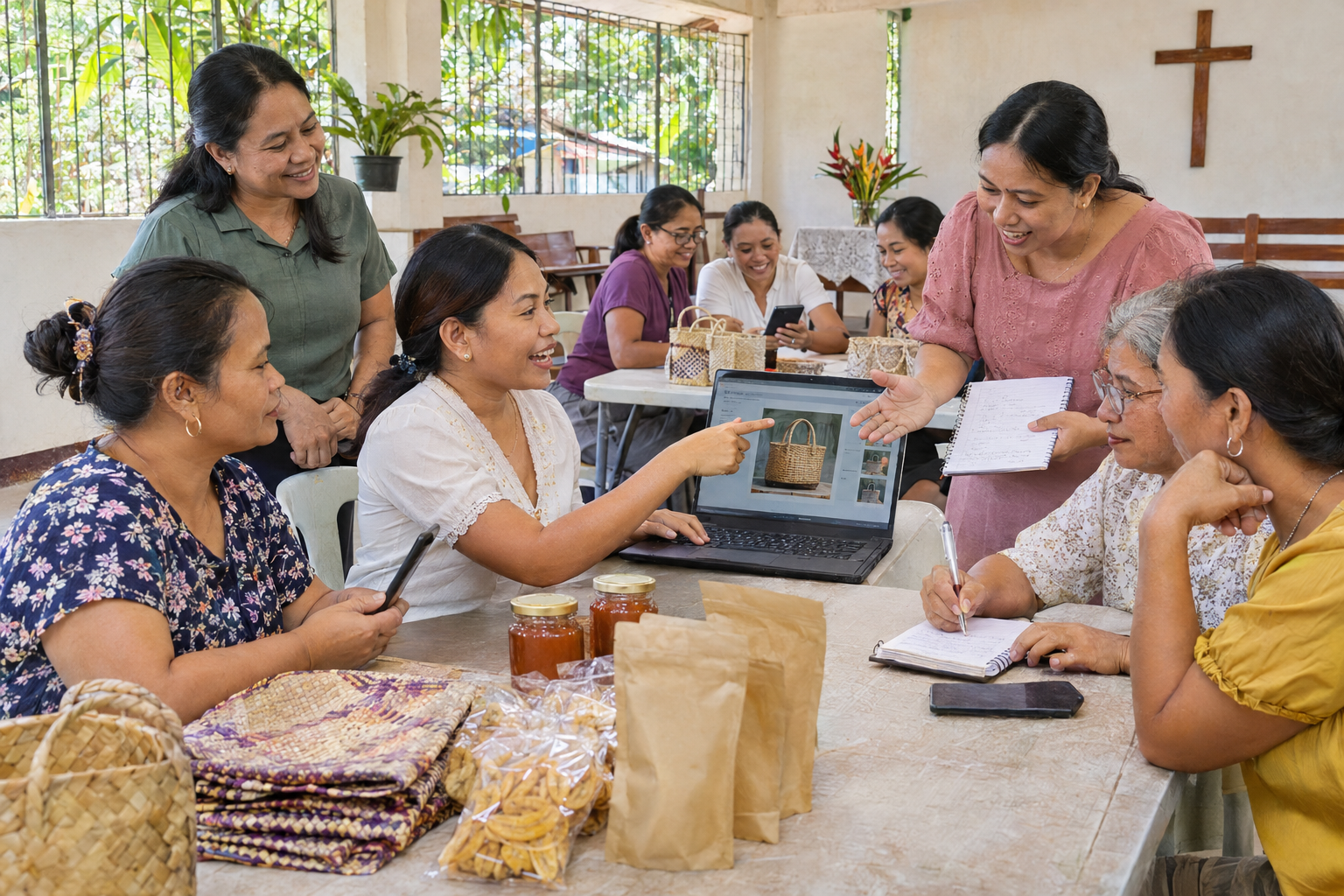
Across Southeast Asia, women run sari-sari stores, farms, food businesses, tailoring shops, online stores, cooperatives, transport services, classrooms, clinics, and ministries. Many begin with little capital and limited time. They manage customers while caring for children or older relatives. They learn digital tools on a phone, stretch household budgets, and create work for others. Their leadership is already present; the question is whether churches and communities will recognize it, remove barriers, and make room for it to grow.
That question is timely on November 7 as Manila hosts the ASEAN Women Economic Summit. The regional gathering focuses on women’s leadership in the digital and innovation economy and on removing barriers that keep women-led enterprises from participating fully in sustainable growth. The Philippine Commission on Women describes the ASEAN Women Entrepreneurs’ Network as a platform for market access, finance, technology, digital opportunity, capacity-building, and regional collaboration.
These goals matter to mission because economic life touches dignity, family stability, education, health, and a person’s ability to serve others. A woman with a sustainable livelihood may gain greater freedom to make decisions, protect her children, support her church, employ neighbors, and respond to crisis. Yet economic ministry can also cause harm when it promotes debt, favors insiders, ignores care responsibilities, or promises that faith guarantees wealth.
A faithful church does not treat women as passive recipients. It listens to their knowledge, respects their agency, and builds practical partnerships in which they lead. Economic empowerment is not a handout with a photograph. It is the patient work of making skills, relationships, finance, technology, markets, and decision-making more accessible and more just.
See women as leaders, not only beneficiaries
Church programs sometimes speak about helping “poor women” without first seeing the enterprise, experience, and leadership already present. A market vendor understands customers and cash flow. A farmer knows seasonal risk. A home-based food producer manages quality, supply, and delivery. A mother who coordinates school, medicine, transport, and household expenses already practises complex planning.
Begin by asking women what they are building, what has worked, where they lose money, what risks they face, and which opportunity matters most. Invite them to design the program, choose training topics, select mentors, and evaluate results. Pay experienced women fairly when they teach rather than expecting endless volunteer labor.
Leadership should also appear in church decision-making. If a ministry plans livelihood activities without women on the planning and finance teams, it will miss important realities. Women should not merely prepare food for a business seminar; they should help decide the budget, partnerships, schedule, safeguards, and definition of success.
Start with real barriers, not assumptions
Women entrepreneurs do not all face the same challenges. One may need bookkeeping skills. Another may lack a government ID, internet access, safe transport, a bank account, accessible equipment, or someone to care for a child during training. A rural producer may have a good product but no affordable route to market. An Indigenous woman may face language barriers or discrimination. A woman with a disability may encounter inaccessible venues and digital platforms.
Use confidential interviews, small-group conversations, and simple business mapping before offering a solution. Ask about unpaid care, time, safety, legal requirements, digital access, finance, supply, pricing, and market demand. Consider seasonal work, weather, school schedules, and religious or cultural responsibilities.
Do not assume every woman wants to become an entrepreneur. Some need pathways into safe, fairly paid employment. Others want to strengthen an existing microbusiness rather than scale rapidly. Economic dignity includes the freedom to choose a realistic path, not pressure to fit a donor’s success story.
Teach skills that protect as well as grow
Useful training begins with practical foundations: separating business and household money, recording sales and expenses, calculating the full cost of a product, setting a sustainable price, managing stock, planning cash flow, and understanding profit. A busy business can still lose money when labor, transport, packaging, spoilage, platform fees, and unpaid credit are ignored.
Training should use the language and numbers participants use every day. Work with actual products and realistic scenarios. Replace one long lecture with short sessions, practice, coaching, and follow-up. Pair new entrepreneurs with trusted local mentors who understand the same market.
Add consumer protection, contracts, taxes, permits, insurance, labor standards, and product safety where relevant. Food businesses need hygiene and labeling guidance. Online sellers need privacy and scam awareness. Employers need to understand fair wages, safe work, and respectful treatment. Growth is not truly successful if it depends on hidden exploitation.
Open the digital door carefully
Phones and online platforms can connect a small enterprise with customers beyond the neighborhood. Women can advertise products, receive payments, learn new skills, compare prices, and join supplier networks. ASEAN’s current MSME plan places digital transformation, access to finance, skills, and participation in regional value chains among its priorities.
But digital opportunity is not automatic. The ASEAN Gender Outlook notes that women and girls use the internet less than men and boys in countries with available data, while platform workers may lack health insurance, pensions, job security, and protection. Women’s care responsibilities can also reduce the hours they can work and the income they earn.
A church-based digital workshop can cover product photography, clear descriptions, customer communication, basic spreadsheets, secure passwords, two-factor authentication, e-wallet safety, privacy settings, and recognizing fake orders or investment schemes. Never display a participant’s private account, balance, address, or customer list to the group.
Provide devices for practice when possible, but do not assume everyone owns a new phone or has reliable data. Offer printed steps and offline practice. Include older women and participants with disabilities. Digital ministry succeeds when technology becomes usable, safe, and relevant—not when the trainer demonstrates the most advanced tool.
Treat access to finance as a safety issue
Lack of capital is a common barrier, but any loan can become dangerous when repayment terms, fees, interest, or collection practices are unclear. Women may also be targeted by predatory lenders, fake investment opportunities, pyramid schemes, account takeovers, and online loan harassment.
The Asian Development Bank reports that women-owned Philippine micro, small, and medium enterprises face particular barriers to credit and are less likely to use digital financial services. ADB recommends financial products designed around women’s needs together with financial and digital literacy.
Church leaders should not recommend a lender, cooperative, investment, or e-wallet simply because someone in the congregation promotes it. Conduct due diligence with qualified legal and financial advice. Explain total repayment, penalties, collateral, data access, and complaint channels in plain language. Give participants time to decide without spiritual pressure.
Grants or savings groups can help in some settings, but they need transparent rules, conflict-of-interest safeguards, proper records, and fair selection. Never ask a pastor to control a woman’s business funds. Economic support should increase agency, not transfer control from one gatekeeper to another.
Use church purchasing power fairly
Churches buy food, printing, uniforms, cleaning supplies, decorations, transport, accommodation, gifts, and event services. Those purchases can become practical market access for responsible women-led enterprises. Instead of creating a training program with no customers, a church can review its procurement and invite qualified local businesses to compete fairly.
Fair procurement does not mean choosing a business only because the owner is a church member. Publish clear requirements, compare quality and price, avoid favoritism, and pay on time. Large orders should include realistic lead times and written agreements. Do not demand a “ministry discount” that leaves a small producer absorbing the cost.
Church networks can also host carefully curated market days, connect producers with ethical retailers, share equipment, and support cooperative storage or delivery. Test demand before encouraging someone to borrow money for expansion. Market access is more useful than producing goods that no one is prepared to buy.
Make participation possible for caregivers
Women’s economic programs often fail because they schedule training as if participants have no one else to care for. A three-day seminar may be “free” while still costing a woman lost sales, transport, meals, and child care. Evening sessions may be unsafe or impossible for someone responsible for an older relative.
Ask participants when and where they can attend. Provide safe child care with trained, screened adults when appropriate. Offer transport support, accessible venues, breastfeeding space, shorter sessions, recordings, or repeated schedules. Involve men and families in conversations about sharing care and household work.
Support should not reinforce the idea that women must carry both full business responsibility and all domestic responsibility. Churches can teach mutual service within the family, challenge harmful expectations, and encourage husbands and other relatives to share care, budgeting, and decision-making.
Protect women from violence and harassment
Economic activity can increase exposure to harassment online, in markets, during travel, or from people who control money and property. Greater income can sometimes trigger conflict or abuse within a household. A responsible program plans for safety rather than assuming income alone will solve every problem.
Create a code of conduct for trainers, mentors, buyers, staff, and participants. Prohibit sexual harassment, coercion, requests for personal favors, and exploitation. Offer more than one confidential reporting channel. Know the local referral pathway for violence, legal aid, health care, psychosocial support, and emergency protection.
Do not publicly identify a survivor or pressure her to reconcile. Do not make business support conditional on disclosing abuse. Economic ministry staff should receive safeguarding and referral training, while specialized professionals handle cases beyond the ministry’s competence.
Keep faith separate from financial promises
The Bible honors honest work, wise stewardship, generosity, justice, and care for people who are excluded. It does not promise that every faithful person will become wealthy or that every business will succeed. Markets change, illness happens, disasters strike, and even good ideas can fail.
Avoid prosperity teaching, public seed-money pressure, guaranteed-return language, and testimonies that imply poverty results from weak faith. Prayer can strengthen courage and discernment, but it should not replace research, accounting, legal compliance, or professional advice.
When a business struggles, respond without shame. Review what happened, protect the family from deeper debt, and help the owner decide whether to adapt, pause, close, or seek employment. Closing an unsustainable enterprise can be wise stewardship rather than spiritual failure.
Measure what women say matters
Counting trainees, loans, or social-media posts does not show whether lives improved. Ask participants what changed: Did income become more stable? Did debt fall? Did customers increase? Did recordkeeping improve? Is work safer? Does the woman have greater control over earnings and decisions? Can she rest? Did her children remain in school? Did the business create decent work?
Track negative effects too. Did conflict increase at home? Did loan payments become stressful? Did online harassment rise? Did one group receive most opportunities? Use confidential feedback and allow participants to leave without penalty.
Share results transparently while protecting identities. Let women explain the meaning of the numbers and decide which stories may be published. The goal is not to prove that the ministry was heroic. It is to learn whether the partnership strengthened dignity, freedom, and sustainable opportunity.
Leadership that multiplies
The strongest program does not keep women dependent on the church. It develops local mentors, peer networks, cooperative relationships, and links with qualified government, business, training, and financial institutions. Women who gain experience can teach the next group, negotiate with buyers, and advocate for safer policies.
Cross-cultural mission teams can contribute useful skills and connections, but they should not become permanent gatekeepers. Listen before designing. Use local trainers where possible. Translate resources. Pay fairly. Transfer tools and decisions. Celebrate women’s leadership without claiming ownership of it.
The ASEAN Women Economic Summit places women at the center of innovation, integration, and inclusion. Churches can make that vision visible at community level: a safer digital account, an honest price, a fair contract, shared child care, a first market connection, or a woman invited to lead the meeting rather than merely serve refreshments.
Make room and walk together
Women do not need the church to give them value; they already bear the image of God. They do not need outsiders to create their gifts; those gifts are already being used in homes, markets, farms, workplaces, and congregations. The church’s task is to recognize, equip, protect, connect, and refuse systems that silence or exploit.
When women have room at the table, families and communities gain more than income. They gain knowledge, resilience, leadership, and new possibilities for service. Mission becomes a partnership in which people are not rescued from above but strengthened alongside one another—working honestly, sharing opportunity, and seeking the good of the whole community.
Further reading: the ASEAN Business Advisory Council Philippines on the ASEAN Women Economic Summit; the Philippine Commission on Women on the ASEAN Women Entrepreneurs’ Network; ASEAN’s MSME development priorities for 2026–2030; and the Asian Development Bank on women’s financial inclusion and entrepreneurship in the Philippines.
Strengthen locally led opportunity
Ask SendUsAll about responsible mission preparation, community partnership, and practical service in the Philippines.
Contact SendUsAll