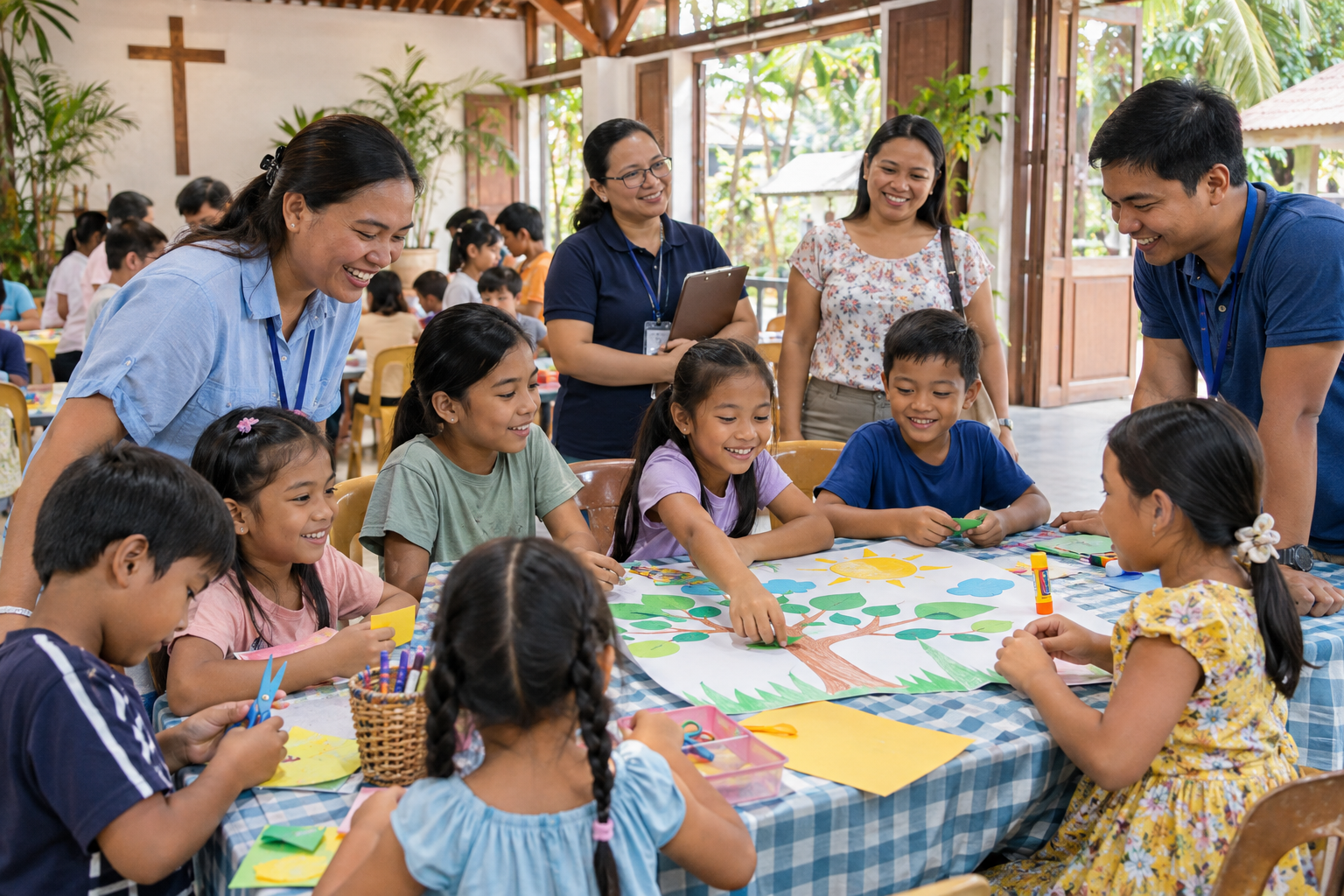
Children should be able to enter a church, Sunday school, feeding program, camp, or mission activity without fear. They should be known by name, listened to with respect, protected from harm, and free to participate without pressure. A welcoming ministry is not only lively and friendly. It is intentionally safe.
November is National Children’s Month in the Philippines. The 2026 theme—“Manindigan! Tumugon at Kumalinga: Sa Batang Handa, Mas Ligtas ang Bansa”—calls communities to stand, respond, and care so that children are prepared and the nation is safer. The Commission on Human Rights has emphasized child-centred emergency preparedness, inclusion, and protection before, during, and after crises.
This year’s observance also comes as church leaders in the Philippines work toward national safeguarding guidelines. A November 3 report from the Pontifical Commission for the Protection of Minors describes recent Manila discussions on safe-environment standards, reporting mechanisms, support for victims and survivors, clear responsibilities, formation, and institutional accountability.
These concerns apply across Christian traditions. Every church and mission organization that serves children needs practical safeguards. Trust in a pastor, volunteer, visitor, or missionary is not enough by itself. Love becomes responsible when it creates clear boundaries, responds to warning signs, and places the child’s safety ahead of reputation.
Safeguarding is more than responding to abuse
Child safeguarding means preventing harm that could be caused by an organization’s people, programs, property, communication, travel, partnerships, or failures to act. It includes physical, sexual, and emotional abuse; neglect; exploitation; bullying; unsafe discipline; online harm; and preventable risks during activities and emergencies.
Child protection often focuses on helping a child who is already experiencing harm. Safeguarding includes that response, but it begins earlier. It asks how rooms are arranged, adults are selected, trips are supervised, photographs are shared, concerns are reported, and leaders are held accountable.
The International Child Safeguarding Standards organize this work under four areas: policy, people, procedures, and accountability. A church does not become safe by writing one document. The document must shape everyday decisions from recruitment to reporting.
Write one clear policy for everyone
A safeguarding policy should state that every child has equal dignity and the right to protection, regardless of disability, family income, ethnicity, language, faith background, gender, health, migration status, or behavior. It should apply to pastors, staff, volunteers, missionaries, drivers, photographers, cooks, interns, partner organizations, and visitors.
Define a child according to Philippine law and applicable organizational standards. Name the types of harm the ministry seeks to prevent. Explain how concerns can be reported, who receives them, when government authorities must be contacted, how confidentiality is protected, and what happens when a leader is involved.
Use simple language and translate key information where needed. Create a child-friendly version that explains safe and unsafe behavior, trusted adults, and how to ask for help. Display reporting information in places children and parents can see without having to ask a leader.
Choose and prepare workers carefully
A willing heart is important, but it is not the only requirement for children’s ministry. Use an application, identity verification, references, interviews, and lawful background checks appropriate to the role and local context. Ask about previous work with children and discuss safeguarding expectations before anyone begins.
Screen short-term mission participants too. A visitor should not gain unsupervised access simply because a partner church, donor, or respected pastor recommends them. The receiving church’s child-safety rules apply to everyone, including senior leaders and foreign guests.
Training should cover the code of conduct, boundaries, recognizing possible harm, responding to disclosures, emergency procedures, online communication, photography, discipline, disability inclusion, and reporting. Refresh training regularly and record attendance. Someone who refuses the rules should not work with children.
Use a practical code of conduct
A code of conduct turns values into observable behavior. It should prohibit sexualized language, humiliating punishment, bullying, favoritism, secret gifts, private meetings in hidden places, unsafe physical contact, and communication designed to bypass parents or ministry oversight.
Adults should avoid being alone with a child in an isolated space. Use open doors, visible rooms, appropriate adult-to-child ratios, and more than one approved adult wherever possible. If an urgent one-to-one conversation is necessary, remain observable and follow the ministry’s procedure.
Physical contact should be child-led, public, culturally appropriate, and never forced. A child who does not want a hug, prayer touch, or posed photograph must be respected. Spiritual authority must never be used to demand affection, obedience to a private request, or silence.
Make every activity safe by design
Risk assessment should happen before Sunday school, camps, transport, swimming, sports, home visits, feeding, outreach, and overnight activities. Consider the venue, toilets, entrances, traffic, water, weather, medical needs, allergies, medications, accessibility, supervision, transport, sleeping arrangements, and emergency contacts.
Keep accurate attendance and authorized pickup information. Do not release a young child to an unfamiliar person because they claim to be a relative. Establish how parents or guardians communicate changes and how staff verify them.
For trips, use approved drivers and roadworthy vehicles. Seat children safely, follow capacity limits, keep a passenger list, and share the itinerary with guardians and ministry leadership. Avoid placing one adult alone in a vehicle with one child when reasonable alternatives exist.
Overnight events need special safeguards: separate age-appropriate sleeping arrangements, clear bathroom and changing rules, trained leaders of suitable genders, controlled access to sleeping areas, and a plan for a child who becomes frightened or ill.
Protect children during emergencies
The 2026 National Children’s Month theme highlights preparedness. During typhoons, floods, earthquakes, fires, or displacement, children may be separated from caregivers, miss medication, lose assistive devices, or face increased risk of abuse and trafficking.
Church emergency plans should include child registration, verified reunification, accessible evacuation, confidential medical information, safe toilets and sleeping spaces, psychosocial first aid by trained people, and referral to government services. Never send a child away with an adult whose authority has not been confirmed.
Practice drills without frightening children. Explain what will happen in age-appropriate language. Include children with mobility, sensory, communication, intellectual, or health needs in planning rather than designing a separate solution after an emergency begins.
Take online ministry boundaries seriously
Children’s ministry now continues through group chats, livestreams, learning platforms, games, and social media. Use ministry-managed accounts rather than private disappearing messages. Include parents or guardians in communication where appropriate, set reasonable hours, and keep records according to policy.
Adult workers should not request secret conversations, sexual or romantic content, private images, or personal information unrelated to ministry. They should not move a child from an approved group into a hidden account. Report grooming, threats, exploitative material, and other online risks through the proper safeguarding and government channels.
Teach children not to share passwords, addresses, school schedules, live locations, or intimate images. Make clear that a child who has been manipulated is not to blame and can ask for help without shame.
Handle photographs and stories with consent
Mission teams often take photographs to report to churches and supporters. Obtain informed permission from the parent or guardian and listen to the child’s own choice. Explain where the image may appear and that public posts can be copied beyond the ministry’s control.
Do not photograph children while bathing, changing, receiving medical care, visibly distressed, or in another humiliating situation. Avoid captions that expose poverty, disability, abuse, health status, home location, or family crisis. Remove school names, addresses, vehicle plates, and other identifying details when they could create risk.
Receiving food, school supplies, prayer, or ministry support must never depend on agreeing to a photograph or testimony. Consent given under pressure is not meaningful consent.
Listen when a child speaks
Children may disclose harm directly, hint through behavior, or tell another child first. If a child speaks, stay calm. Listen without shock, blame, or interrogation. Thank them for telling you. Say that the harm is not their fault and that you will seek help.
Do not promise complete secrecy. Explain that information will be shared only with people who need to help keep them safe. Record the child’s words accurately as soon as possible without adding assumptions. Follow the reporting procedure immediately.
Do not confront the alleged person, conduct your own investigation, pressure the child to repeat the account to many leaders, or try to settle a serious concern privately between families. Those actions can increase danger, damage evidence, and re-traumatize the child.
Report concerns through proper channels
Every ministry should know its local referral pathway before a concern arises: the designated safeguarding lead, local social welfare and development office, Barangay Council for the Protection of Children, law enforcement Women and Children Protection Desk, health services, and other authorized partners.
In the Philippines, MAKABATA Helpline 1383 is the government’s central 24/7 reporting and referral system for children in need of special protection. The Department of the Interior and Local Government and the Council for the Welfare of Children linked MAKABATA 1383 with Unified 911 in October 2026 so urgent reports can reach police, fire, medical, rescue, and social-welfare services more quickly. If a child faces imminent or life-threatening danger, contact emergency services immediately.
Follow Philippine law, denominational requirements, and the ministry’s policy. Confidentiality means limiting information to people with a legitimate safeguarding role; it does not mean hiding abuse to protect a church’s name.
Respond in a survivor-centred way
A safe response considers what the child and family need beyond the report: immediate safety, medical care, qualified counseling, legal assistance, spiritual support they freely choose, help with school, and protection from retaliation or gossip.
Do not require a victim or survivor to participate in an internal process as a condition for receiving care. Do not pressure them to forgive quickly, meet the person accused, remain silent “for unity,” or accept prayer as a replacement for professional services.
Pastoral care should affirm dignity and choice. Use trained female or male caregivers according to the child’s comfort. Coordinate with authorized professionals, and avoid making promises about outcomes that church leaders cannot control.
Children should help shape safer ministry
Safeguarding is stronger when children are heard. Ask them which places feel safe, who they would tell if worried, whether adults listen, what happens during transport, and what online communication they receive. Use age-appropriate, accessible methods and never ask children to investigate one another.
Create more than one way to raise a concern: a known safeguarding adult, private conversation, child-friendly form, parent contact, or official helpline. Children with disabilities may need sign language, pictures, assistive communication, physical access, or a trusted support person.
Tell children what changed because of their feedback. Participation becomes meaningful when leaders respond rather than merely collecting answers.
Accountability begins at the top
Senior pastors, elders, boards, and mission directors must follow the same rules as everyone else. They should receive safeguarding reports, monitor whether procedures are used, provide resources for training and safer facilities, and commission independent review when appropriate.
Partners should be assessed before joint activities. Agreements should state whose safeguarding policy applies, who receives reports, and how concerns involving workers from different organizations will be handled. Funding and reputation must never outweigh child safety.
Review incidents, near misses, complaints, and changing risks without exposing confidential details. Audit consent records, volunteer files, training dates, online accounts, transport arrangements, and emergency plans. A policy that is never checked can create false confidence.
A church where children are truly welcomed
Jesus placed children at the center and warned adults not to cause them harm. The church honors that teaching not only through kind words, but through structures that prevent abuse, make concerns easier to report, and hold leaders responsible.
A child-safe ministry may sometimes feel less convenient. It requires more planning, more than one trained adult, careful transport, documented consent, difficult reporting, and the courage to stop a popular worker who refuses boundaries. That inconvenience is a small price for trust.
National Children’s Month invites every church to ask an honest question: are children merely present in our ministry, or are they genuinely safe to belong? When policy, people, procedures, and accountability work together, the answer can become visible in every classroom, camp, outreach, and mission team.
Further reading: the Philippine Commission on Human Rights on National Children’s Month 2026; the Pontifical Commission for the Protection of Minors on the Philippine Church’s national safeguarding framework work; Keeping Children Safe’s International Child Safeguarding Standards; UNICEF Philippines on child protection; and the Philippine government’s October 2026 linkage of Unified 911 and MAKABATA Helpline 1383.
Make every ministry space safer for children
Ask SendUsAll about responsible mission preparation, local church partnership, and child-safe service in the Philippines.
Contact SendUsAll