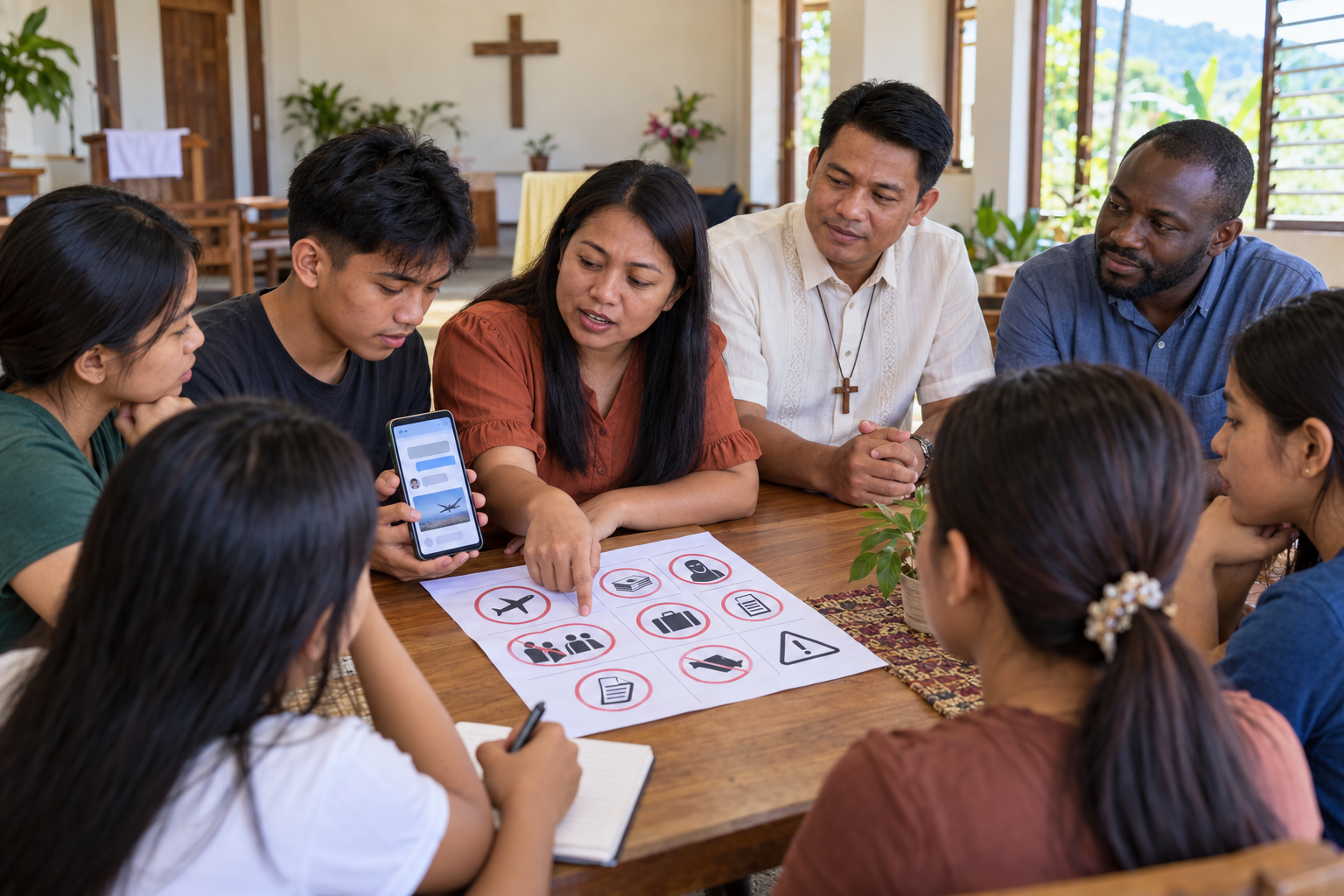
A message arrives with a wonderful promise: high salary, free travel, quick departure, and no experience required. For a young person who needs work or a parent carrying family debts, it can feel like an answer to prayer. But some offers are designed to deceive. Behind them may be illegal recruitment, forced labor, or a trafficking network.
This danger is receiving renewed attention across Southeast Asia. From October 19 to 21, interior and security ministers gathered in Metro Manila for the 20th ASEAN Ministerial Meeting on Transnational Crime. Their agenda included trafficking in persons, cybercrime, money laundering, and other threats that cross national borders. The Philippine Department of Migrant Workers is also warning about fraudulent online recruitment and urging job seekers to use licensed agencies and verified job orders.
The problem is not only that people are being cheated out of money. INTERPOL says many victims have been recruited through false job advertisements, taken to scam compounds, and forced to commit online fraud. People who appear to be scammers may themselves be under threat. This difficult reality requires churches to respond with wisdom, compassion, and respect for trained authorities.
Why local churches have an important role
Churches cannot investigate trafficking cases or replace police, social workers, immigration officials, and specialist organizations. They should not try. Yet local congregations are often among the first places where people share their hopes and fears. A pastor may hear about a job offer during prayer. A youth leader may learn that a student has been asked to travel immediately. A small group may notice that someone is borrowing money for an unexplained recruitment fee.
This closeness gives the Church an opportunity to prevent harm before travel happens. Prevention may be as simple as creating a safe place where a person can slow down, ask questions, verify information, and hear that caution is not a lack of faith. Good opportunities can survive careful checking. Recruiters who demand secrecy and speed often do not want questions.
Church leaders must also avoid shame. People respond to false offers because they want to support their families, escape hardship, or build a better future. Their hope should not be mocked. A person who has already lost money or entered danger needs help, not a sermon about being foolish.
Teach people to pause before they pay or travel
A church can organize a short safety discussion for young adults, parents, and returning migrant workers. Use simple language and real examples without naming victims. Encourage everyone to pause when an offer includes several warning signs:
The recruiter contacts the applicant only through a personal social-media account or encrypted chat. The promised salary is far higher than similar jobs. The applicant is told that no interview, experience, or clear contract is needed. The recruiter demands payment through a personal bank account or digital wallet. The job description keeps changing. The applicant is asked to surrender a passport, lie to immigration, travel on the wrong visa, or hide the trip from family.
Other warning signs include pressure to leave immediately, a promise to complete documents after arrival, refusal to provide a physical office address, and anger when someone wants to verify the agency. One warning sign does not prove trafficking, but several signs should lead a person to stop and seek official advice.
Verify the agency and the job order
For Filipinos considering overseas work, the Department of Migrant Workers provides official lists of licensed recruitment agencies and approved job orders. Checking only the agency name is not enough. Criminals may copy the name, logo, photos, or address of a real company. Applicants should use official government contact details rather than the phone number sent by the recruiter.
A church volunteer can sit with an applicant while they check the official DMW website. The applicant should confirm the agency's current license status, the approved job order, the employer, the position, and the destination. Any contract should be read slowly and compared with what was promised. If information does not match, stop the process and ask the DMW for guidance.
Churches should never endorse a recruiter simply because the recruiter attends church, quotes Scripture, or was introduced by a trusted friend. Faith language is not proof. Honest recruitment must still follow the law and official process.
Protect privacy and do not confront suspected traffickers
If a person may be at risk, church leaders should not launch their own investigation, arrange a secret rescue, or confront the suspected recruiter. Such actions could place the person, family, and volunteers in greater danger. Do not publish names, photographs, travel details, screenshots, or accusations on social media. Public posts may alert offenders and expose a victim.
Listen calmly. Ask whether the person is in immediate danger and whether it is safe to continue the conversation. With the person's knowledge whenever possible, contact the proper government authority or a qualified anti-trafficking organization. In the Philippines, the Inter-Agency Council Against Trafficking operates the 1343 Actionline, and the IACAT ProtectPortal accepts reports. Immediate danger should be reported through local emergency and law-enforcement channels.
If authorities advise keeping messages, payment records, or travel documents, follow their instructions about how to preserve and share them safely. Church files should never become an informal database of sensitive trafficking information. Limit access and protect confidentiality.
Care for survivors without taking control
A person returning from exploitation may need medical care, safe accommodation, legal help, financial assistance, trauma-informed counseling, and support with documents. One congregation is unlikely to provide all of this. Its most faithful role may be to connect the survivor with trained services, help with practical needs, and remain a patient community during recovery.
Do not force a survivor to tell the story publicly, give a testimony, forgive quickly, meet the offender, or show gratitude to helpers. Never use a person's experience in fundraising or ministry promotion without freely given and informed consent. The survivor should have as much choice and control as possible.
Words matter. Describe the person as a survivor or possible victim, not as a criminal merely because they may have been forced to take part in online scams. Avoid questions that sound like blame: “Why did you believe them?” or “Why didn't you leave?” Traffickers often use threats, debt, violence, confiscated documents, isolation, and fear for family members to control people.
Build protection into youth and mission ministry
Anti-trafficking awareness should not be a one-time event. Youth ministries can include digital safety, job verification, healthy boundaries, and wise use of personal information. Parents can learn how online recruitment works. Returning overseas workers can share practical lessons about lawful processes without being expected to disclose painful experiences.
Mission teams also need clear safeguarding standards. Volunteers should be screened and supervised. Ministry photographs should be taken only with consent. Children's names, locations, and personal stories should not be posted carelessly. Offers of schooling, travel, work, sponsorship, or housing must be transparent and accountable. Mission work should never create the secrecy and unequal power that traffickers exploit.
Churches can build relationships with barangay officials, local social-welfare offices, schools, migrant-worker groups, and qualified organizations before a crisis occurs. Invite trained speakers rather than presenting unverified internet advice. Keep official reporting information available, and review it regularly because contacts and procedures can change.
Address the pressures traffickers exploit
Trafficking prevention is also connected to poverty, unemployment, family debt, discrimination, and lack of safe opportunities. Churches cannot solve these problems alone, but they can respond in practical ways: honest job referrals, skills training, emergency support, financial education, mentoring, and partnerships with reputable employers.
Leaders should be especially careful when offering help. Assistance must not be exchanged for church attendance, conversion, personal loyalty, or unpaid labor. Christian service protects dignity and freedom. It does not use a person's need as leverage.
The Gospel calls the Church to tell the truth, defend the vulnerable, and welcome those who have been harmed. In this ministry, success may look quiet: a young person checks an agency before sending money; a parent asks one more question; a pastor makes a careful referral; a survivor discovers a community that will not judge or exploit them.
Online recruitment moves quickly, but wisdom gives people permission to slow down. A church that teaches careful verification, respects professional authorities, protects privacy, and walks patiently with survivors becomes a safer place. That is not only social action. It is mission shaped by the love and justice of Christ.
Further reading and official help: the Philippine government's report on the October 19–21 ASEAN meeting; the Department of Migrant Workers' licensed recruitment-agency list and approved job orders; and the IACAT ProtectPortal. In the Philippines, the 1343 Actionline receives trafficking reports. For immediate danger, contact local emergency services.
Help build safer communities
Pray with SendUsAll, support practical protection ministry, or ask how your church can serve vulnerable families responsibly in the Philippines.
Contact SendUsAll