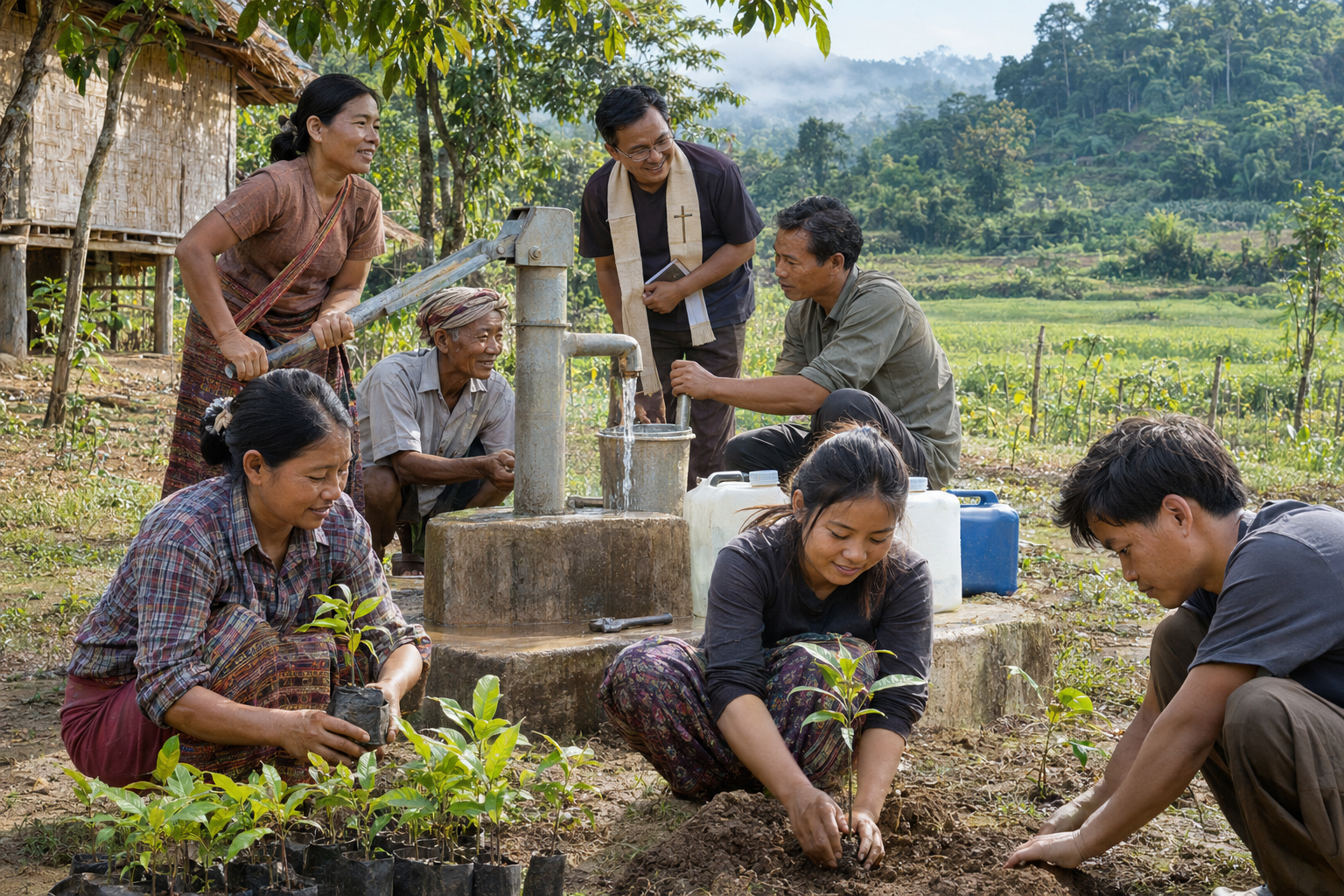
When conflict reaches a community, the damage is not limited to homes, roads, or the lives that appear in news reports. Wells may become unsafe. Irrigation systems may stop working. Fields may be abandoned. Forests may be cut for fuel or survival. Explosive remnants can make farms and paths dangerous long after the fighting moves elsewhere. The land that once supported a family can become another source of fear.
November 6 is the International Day for Preventing the Exploitation of the Environment in War and Armed Conflict. The United Nations observes the day because durable peace is difficult when the water, soil, forests, farms, and natural resources that sustain people have been destroyed or exploited. This year the message has special relevance for Southeast Asia, where conflict, displacement, climate shocks, and economic hardship continue to overlap.
Myanmar’s 2026 humanitarian crisis shows the scale of that overlap. A September UNICEF report said 16.2 million people, including 4.9 million children, needed humanitarian assistance, while nearly 3.8 million people were internally displaced by June. Conflict-affected communities were also facing floods, landslides, water shortages, unsafe sanitation, disease risks, and rising landmine danger.
Churches and mission teams cannot repair such a crisis by themselves. They should not enter unsafe areas, compete with trained humanitarian agencies, or present simple answers to complex conflict. Yet they can serve faithfully: supporting locally led care, protecting dignity, sharing verified information, giving without discrimination, and helping people recover the life-supporting systems on which their future depends.
Creation care is also care for people
The environment is sometimes treated as an optional concern to consider after human needs have been met. In conflict-affected communities, that separation does not work. People need clean water, safe land, food-producing soil, shade, fuel, and functioning ecosystems to survive. Damage to creation quickly becomes hunger, illness, displacement, lost income, and increased danger for women and children.
The International Committee of the Red Cross explains that international humanitarian law protects the natural environment because civilian life depends on it. Drinking-water installations, irrigation systems, crops, and other resources essential for survival receive specific protection. The ICRC’s new November 2026 guidance urges authorities to turn these legal protections into practical policies and training.
For Christian mission, the principle is wider than environmental activism. God’s love embraces people in the full reality of their lives. Preaching hope while ignoring poisoned water or unusable farmland leaves part of the suffering unseen. Caring for creation does not replace evangelism; it helps ensure that service is honest, compassionate, and concerned for the neighbor’s whole life.
Begin with listening, not a project
Outside teams often arrive with a ready-made idea: plant trees, distribute water filters, dig a well, provide seeds, or rebuild a church. Each action can help, but each can also fail when local conditions are misunderstood. A well may draw contaminated water. Imported trees may not survive. A distribution can create tension. Construction may expose the location of displaced families or place workers near unexploded ordnance.
Start by listening to residents, local churches, women’s groups, farmers, Indigenous leaders, persons with disabilities, youth, and qualified humanitarian or environmental professionals. Ask what has changed, what is safe, who controls access, and which community systems already work. Listen separately to people who may not speak freely in a large meeting.
Local leadership is more than permission. Residents should help define priorities, select methods, manage resources, and decide how success will be measured. The knowledge of a farmer who understands the soil, a woman who knows the safest water source, or a young person who maps dangerous paths may be more valuable than an outsider’s technical enthusiasm.
Do no harm in a divided setting
Every decision in a conflict setting can affect relationships. Choosing one village, hiring one family, displaying one symbol, or publishing one photograph may be interpreted as taking sides. Assistance that is meant to help can deepen resentment or expose recipients to retaliation.
Use clear, needs-based criteria and explain them openly. Serve without discrimination based on ethnicity, religion, political identity, nationality, gender, or ability. Coordinate with experienced local partners who understand conflict dynamics. Keep beneficiary information confidential and collect only what is necessary.
Mission teams must never gather military information, transport weapons, use armed actors for publicity, or allow aid to become a reward for religious participation. Prayer and spiritual care should be available without pressure. Food, water, shelter, medical referral, or livelihood support must never depend on conversion, church attendance, testimony, or a photograph.
Protect water before expanding programs
Safe water is often the most urgent connection between environmental damage and human health. Displacement can overwhelm wells and toilets. Flooding can contaminate sources. Fuel shortages can interrupt pumping and treatment. Damaged systems can increase acute watery diarrhoea, skin disease, and other preventable illness.
Churches can support water, sanitation, and hygiene work under qualified guidance. This may include funding laboratory testing, repairing an approved community system, providing appropriate containers, supporting accessible toilets, sharing hygiene information in local languages, or helping trained partners deliver supplies.
Do not assume that clear water is safe. Do not distribute filters or chemicals without instruction, replacement plans, and quality checks. Do not dig near burial sites, latrines, waste areas, or suspected explosive hazards. Community water committees should include the people who collect and use water daily, not only formal leaders.
Respect landmine and explosive-ordnance warnings
Environmental recovery can bring people into fields, forests, riverbanks, or damaged buildings where landmines and unexploded ordnance may remain. UNICEF recorded 327 mine and explosive-ordnance incidents and 487 civilian casualties in Myanmar during the first half of 2026; 113 of the casualties were children.
Mission volunteers should never touch, move, photograph closely, mark casually, or attempt to clear a suspicious object. Stop movement, keep others away, remember the location from a safe distance, and report it through recognized local channels. Only trained and authorized specialists should conduct clearance.
Tree planting, farming assistance, debris removal, well repair, and home reconstruction must wait until the site has been assessed where contamination is possible. A project deadline is never more important than a life. Churches can reinforce official risk education, especially for children, without creating their own technical instructions.
Support livelihoods without exhausting the land
Families displaced by conflict may lose access to farms, livestock, fisheries, forests, tools, markets, and legal documents. When income disappears, people may have no choice but to cut trees, sell productive assets, overfish, borrow at harmful rates, or accept dangerous work. These are survival decisions, not evidence that poor communities do not care about the environment.
Livelihood support should reduce pressure rather than move it elsewhere. Work with local agricultural services and community groups on appropriate seeds, soil recovery, small livestock, tools, safe storage, market access, and cash assistance. Cash may offer more dignity and flexibility than imported goods when markets function and specialists judge it safe.
Avoid flooding a local market with free items that undermine small businesses. Do not introduce unfamiliar seed varieties, livestock, pesticides, or equipment without environmental and cultural assessment. Build maintenance, ownership, and replacement costs into the plan from the beginning.
Plant for recovery, not for photographs
Tree planting is popular because it is visible and easy to report. But a day of planting is not the same as restoring a forest. Seedlings die when the species is unsuitable, the land is contested, grazing is unmanaged, or no one is responsible for watering and protection.
Choose native species with local ecological guidance. Clarify land rights and obtain the consent of the people who use the area. Budget for nurseries, maintenance, replacement, and monitoring over several seasons. Support natural regeneration where it works better than planting rows of trees.
UN reporting from Yangon’s northern outskirts in October 2026 described accelerated forest loss connected to expanding settlements, livelihood pressure, demand for fuel and timber, and families displaced by hardship. That pattern is a reminder that restoration must address human needs as well as trees. A family that lacks safe cooking fuel or income cannot be expected to protect a forest through slogans alone.
Communicate without creating risk
Stories can mobilize prayer and support, but conflict-related information can endanger people. A face, landmark, road sign, church name, field location, or description of an aid route may reveal more than intended. Even harmless details can be combined with public posts to identify a community.
Ask a security-aware local partner what can be shared. Obtain informed consent, but remember that consent does not remove every danger. Avoid real-time locations, identifiable children, survivor details, political claims, and photographs of suspicious objects or damaged security sites. Delay publication when necessary and remove metadata from files.
Report finances and outcomes honestly without turning residents into symbols of misery. Describe local leadership and strengths. Explain limitations, failures, and what the community changed. A dignified story shows people as neighbors and decision-makers, not scenery for a visiting team.
Care for responders and local church leaders
Local pastors, volunteers, health workers, and community leaders may be serving while displaced or grieving themselves. They can experience exhaustion, moral distress, fear, and pressure from competing needs. Outside partners should not assume that local resilience means unlimited capacity.
Provide realistic workloads, rest, safe transport, communication support, confidential pastoral care, and access to qualified mental-health help. Pay skilled local work fairly. Do not ask a church leader to take security risks simply because an overseas donor wants photographs, rapid results, or direct access to a restricted area.
Short-term teams should receive security, safeguarding, cultural, and conflict-sensitivity orientation. They should know who can stop an activity, how to report concerns, and when to leave. Courage is not ignoring professional advice. Faithful service includes humility about limits.
Pray and partner for a just peace
Environmental recovery cannot substitute for peace, civilian protection, humanitarian access, justice, and accountable government. Communities should not be asked to adapt endlessly to preventable violence. Churches can pray for peace, support principled humanitarian work, welcome displaced neighbors, and advocate carefully for the protection of civilians and the resources they need to live.
Partnership should be long enough to matter. Water systems need maintenance. Livelihoods need seasons. Trees need years. Trauma and trust do not follow a mission-trip calendar. Sustainable support gives local organizations room to lead, learn, and adjust.
Hope that takes root
When creation is wounded, people are wounded with it. Yet recovery can begin through faithful acts: a protected spring, a repaired pump, a safely reopened field, a local nursery, a farmer’s tools, a confidential referral, a family welcomed without conditions.
The church bears witness to the Creator by treating land, water, and human life as gifts rather than resources to exploit. In conflict-affected Southeast Asia, that witness must be careful, locally led, and patient. It does not promise that one project will heal a nation. It chooses instead to protect life, reduce harm, strengthen neighbors, and plant signs of peace that others can continue to nurture.
Further reading: the United Nations on the environment in war and armed conflict; the ICRC’s November 2026 guidance on protecting the natural environment in conflict; UNICEF’s September 2026 Myanmar humanitarian situation report; and the United Nations in Myanmar on forest loss and livelihood pressure around Yangon.
Serve communities with care and humility
Ask SendUsAll about responsible mission preparation, locally led partnership, and practical service in Southeast Asia.
Contact SendUsAll