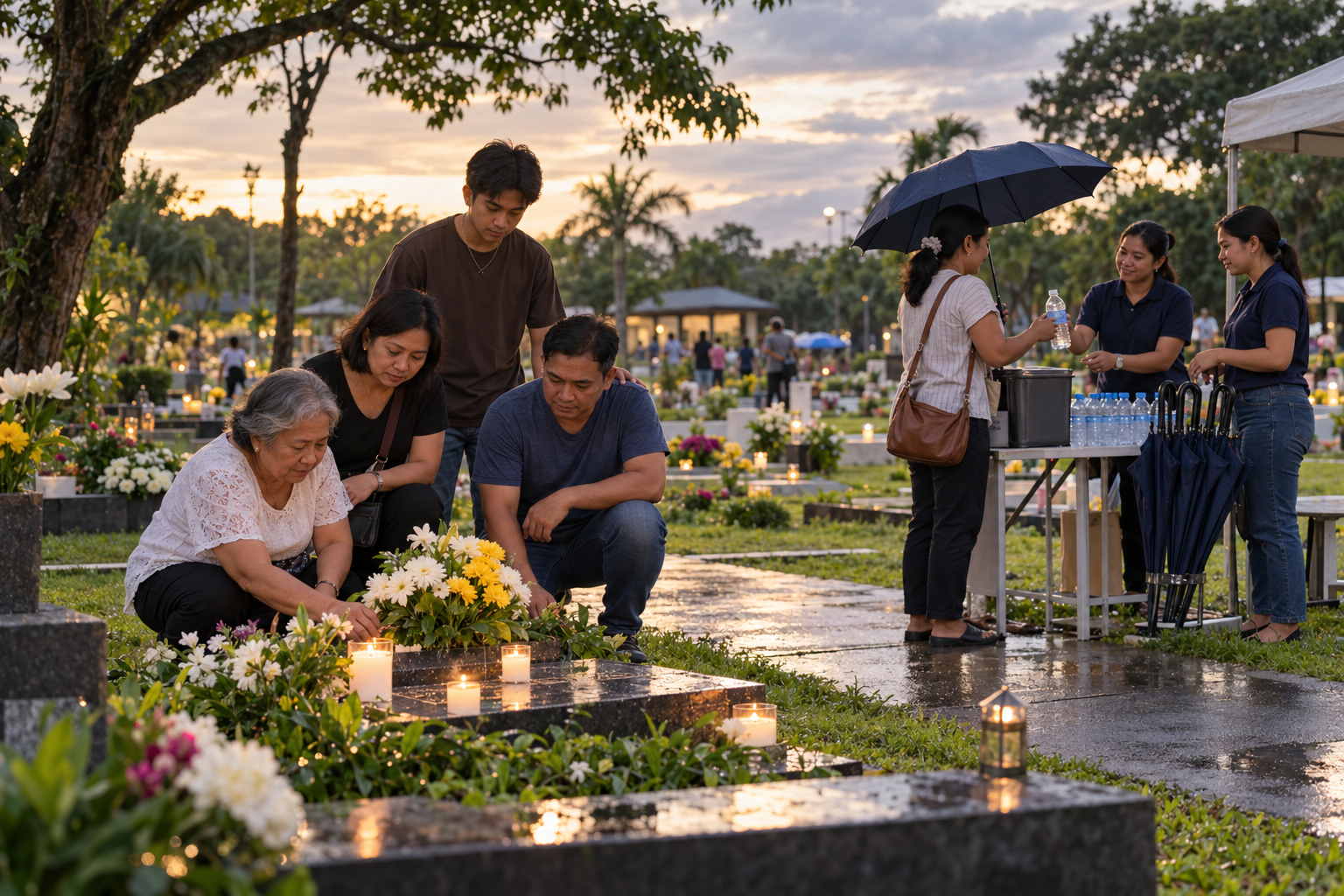
During Undas, a cemetery is more than a place of graves. It becomes a meeting place for memory. Families clean tombs, bring flowers, light candles, share food, tell old stories, and travel long distances to honor those they love. For some, the day is peaceful. For others, it reopens grief that still feels new. A church can serve well by arriving with humility, listening carefully, and making space for both sorrow and hope.
All Saints' Day and All Souls' Day on November 1 and 2 create one of the Philippines' busiest periods of travel and remembrance. Authorities expect millions of people at cemeteries, transport hubs, ports, roads, and places of worship. More than 141,000 police and partner personnel are being deployed for public safety, while health and fire services are on heightened alert.
The weather also requires attention. PAGASA's special outlook for October 30 to November 2 says the northeast monsoon, shear line, and Intertropical Convergence Zone will affect different parts of the country. Several regions may experience rain and thunderstorms. Churches planning cemetery ministry, transport, or outdoor prayer should check the latest local forecast and be ready to change plans.
Begin with presence, not a program
Grief does not always need an immediate answer. A person may need someone who will sit nearby, listen to a story, help carry flowers, or quietly acknowledge that the loss still hurts. Church volunteers should not rush every conversation toward a sermon or use a family's sadness as an opportunity to count decisions.
Ask simple questions: “Would you like company?” “May I help you carry that?” “Would you like us to pray with you?” Respect “no” without showing disappointment. A person can receive water, directions, first aid, or practical help without joining a prayer or giving personal information.
Local churches should coordinate with cemetery administrators, barangay officials, police assistance desks, and health teams before setting up any service point. An approved location protects access routes and prevents volunteers from adding to congestion.
Make room for different ways of grieving
Some people cry openly. Others become quiet, busy, humorous, or tired. One family member may want to talk about the person who died while another avoids the subject. Children may move quickly between sadness and play. None of these reactions automatically shows weak faith.
Avoid statements such as “You should be over it,” “Everything happens for a reason,” or “Do not cry because they are in a better place.” Even a true belief can become hurtful when it silences pain. Jesus wept with people who were grieving. Christian hope does not require pretending that death does not wound us.
Use the name of the person who died if the family does. Listen to memories without correcting small details. Do not compare losses or tell a long story about your own grief unless it genuinely helps the person before you.
Offer prayer without pressure
Undas brings together Catholics, Protestants, members of other faiths, and people who rarely attend church. Ministry in this setting requires respect. Ask permission before praying, keep prayer gentle, and avoid arguments about funeral customs beside a grave.
A Christian prayer can thank God for a life, ask for comfort for the family, and express hope in Christ's victory over death. It should not claim knowledge about a person's eternal condition or turn a private loss into a public performance.
Police have warned visitors to be careful of people falsely presenting themselves as priests or authorized ministers and asking for money. Legitimate church workers should carry verifiable identification, coordinate with their parish or congregation, and never pressure grieving families for donations. If visitors are uncertain, they should be encouraged to confirm a person's identity with the cemetery administration or church office.
Prepare for crowds, heat, and rain
A practical ministry team can provide drinking water, umbrellas, directions, seating for older visitors, and information about the nearest first-aid or police assistance desk. Keep walkways clear and do not block entrances with tables, banners, sound systems, or groups of volunteers.
Check weather updates before each shift. Rain can make paths slippery and increase transport delays. Thunderstorms require a safe shelter plan; volunteers should not remain beneath isolated trees or near exposed metal structures. In hot periods, use shade, water, rest, and shorter shifts.
Children should remain close to parents or guardians. A church help point may offer identification cards on which a guardian writes a contact number, but collect no more information than necessary and dispose of it safely after the event. If a child is separated from family, follow the cemetery's official lost-child procedure rather than posting the child's photo publicly.
Travel is part of the pastoral concern
Many families travel overnight or return to their home province. Crowded terminals, long queues, rain, fatigue, and unfamiliar routes increase risk. Churches can share verified schedules and official advisories, organize safe transport for members who need help, and remind drivers not to travel while exhausted.
MARINA advises sea passengers to verify schedules and ticket details, use authorized ticket channels, follow crew instructions, locate emergency exits and life-saving equipment, and monitor weather advisories for possible cancellations. Mission teams travelling by boat should follow the same guidance and never pressure a local operator to sail in unsafe conditions.
Drivers should inspect brakes, lights, tires, oil, water, battery, fuel, and other essential parts before a long trip. Plan rest stops, use seat belts where available, avoid alcohol, and keep emergency contacts ready. A ministry schedule is never more important than safe arrival.
Use candles and electricity safely
Candles are meaningful symbols of remembrance, but they can also start fires. The Bureau of Fire Protection advises families to place candles in stable, non-flammable holders, keep them away from combustible materials, and avoid burning leaves or rubbish. Water or sand should be available where candles are used.
Church volunteers should not create large candle displays without permission and a fire-safety plan. Keep flame away from tents, dry flowers, plastic decorations, clothing, and children. Follow each cemetery's rules because some places restrict candles, flammable items, or certain containers.
Families leaving home for several days should unplug unnecessary appliances, check cooking gas, secure doors and windows, and follow local fire-service guidance. Churches can help older members with a simple home-safety checklist before travel.
Care for the environment while honoring the dead
Flowers, food packaging, plastic bottles, candle containers, and decorations can leave large amounts of waste after Undas. Respect for loved ones should include respect for the shared ground and the workers who clean it.
Bring reusable water containers where permitted, choose durable or locally grown flowers, avoid excessive plastic wrapping, and separate waste according to cemetery rules. Do not burn leaves or rubbish. A church team can assist with cleanup only after coordinating with administrators and obtaining gloves, tools, and safe disposal arrangements.
Do not photograph piles of waste beside identifiable graves to shame families online. Education works better when it is practical and respectful. Volunteers can model clean habits, provide clearly marked bins, and thank visitors who cooperate.
Protect privacy in moments of sorrow
A cemetery can look visually powerful, especially at sunset with flowers and candles. That does not make every private moment available for ministry publicity. Never photograph people crying, praying, cleaning a grave, or receiving help without informed permission.
Children require extra protection. A parent or guardian's consent is necessary, but the child's comfort also matters. Do not publish names on grave markers, close views of family information, vehicle plates, phone numbers, or documents.
When reporting the ministry, focus on what volunteers provided, what partners contributed, and what the church learned. A wide photo of an approved assistance area may communicate the work without turning grief into content.
Recognize when grief needs more support
Undas can intensify loneliness, traumatic memories, family conflict, anxiety, or depression. The Department of Health has reminded people that remembering loved ones may stir grief and longing, and that rest, reflection, connection, and sharing stories can ease emotional strain.
Church volunteers can listen, but they should know their limits. Keep a referral list for qualified counselors, health facilities, social services, and emergency support. If someone appears in immediate danger, expresses an intention to harm themselves or another person, or is disoriented and unsafe, contact emergency services and stay with the person if it is safe to do so.
Do not promise absolute secrecy when life is at risk. Explain calmly that help must be involved. Prayer can continue while trained professionals respond.
Remember people who cannot visit
Not everyone can travel to a cemetery. Migrant workers may be overseas. Older adults, people with disabilities, hospital patients, people in detention, and families affected by poverty or weather may remain at home. Their grief is no less real.
Churches can arrange home visits, phone calls, accessible remembrance services, transport assistance, or a quiet place to share memories. Ask before visiting and respect the person's energy. A small meal, help contacting relatives, or assistance placing flowers may mean more than a large event.
Be sensitive to families whose loved one has no known grave, died in disaster or conflict, is missing, or was buried far away. Avoid assuming that every person has a grave to visit or a family relationship that was peaceful.
Continue care after the candles are gone
Public attention to grief often fades after the funeral and after annual remembrance days. The hardest moments may come later: a birthday, Christmas, an empty seat, a legal task, or a financial problem that the deceased once handled.
With permission, note which families would appreciate follow-up. A message a week later can ask, “How are you doing now?” Practical help may include meals, transport, childcare, help with documents, or connection to trustworthy services. Do not create dependency or take control of family decisions.
Train a small bereavement-care team that understands listening, boundaries, safeguarding, confidentiality, referral, and cultural differences. Care should not depend on one pastor being available at every hour.
Hope that does not hurry sorrow
Christian mission during Undas is not about competing with a Filipino tradition or turning cemeteries into stages. It is about walking beside people where memory, culture, family, and faith meet. It is about protecting an older visitor from a slippery path, giving water to a tired traveler, helping a child find a parent, listening to a widow's story, and praying when invited.
The Gospel gives hope beyond death, but hope is not a shortcut around grief. It gives strength to remain present within grief. When churches mourn with those who mourn, serve without pressure, respect different families, and continue caring after the holiday, the message of Christ becomes visible in a quiet and trustworthy way.
Further reading: PAGASA's special weather outlook for Undas 2026, the Bureau of Fire Protection's fire and emergency-safety guidance, MARINA's sea-travel advisory, and the Department of Health–Cordillera guidance on health, travel, and grief during Undas.
Serve families with quiet, practical hope
Ask SendUsAll about locally led outreach, pastoral care, and respectful community ministry in the Philippines.
Contact SendUsAll