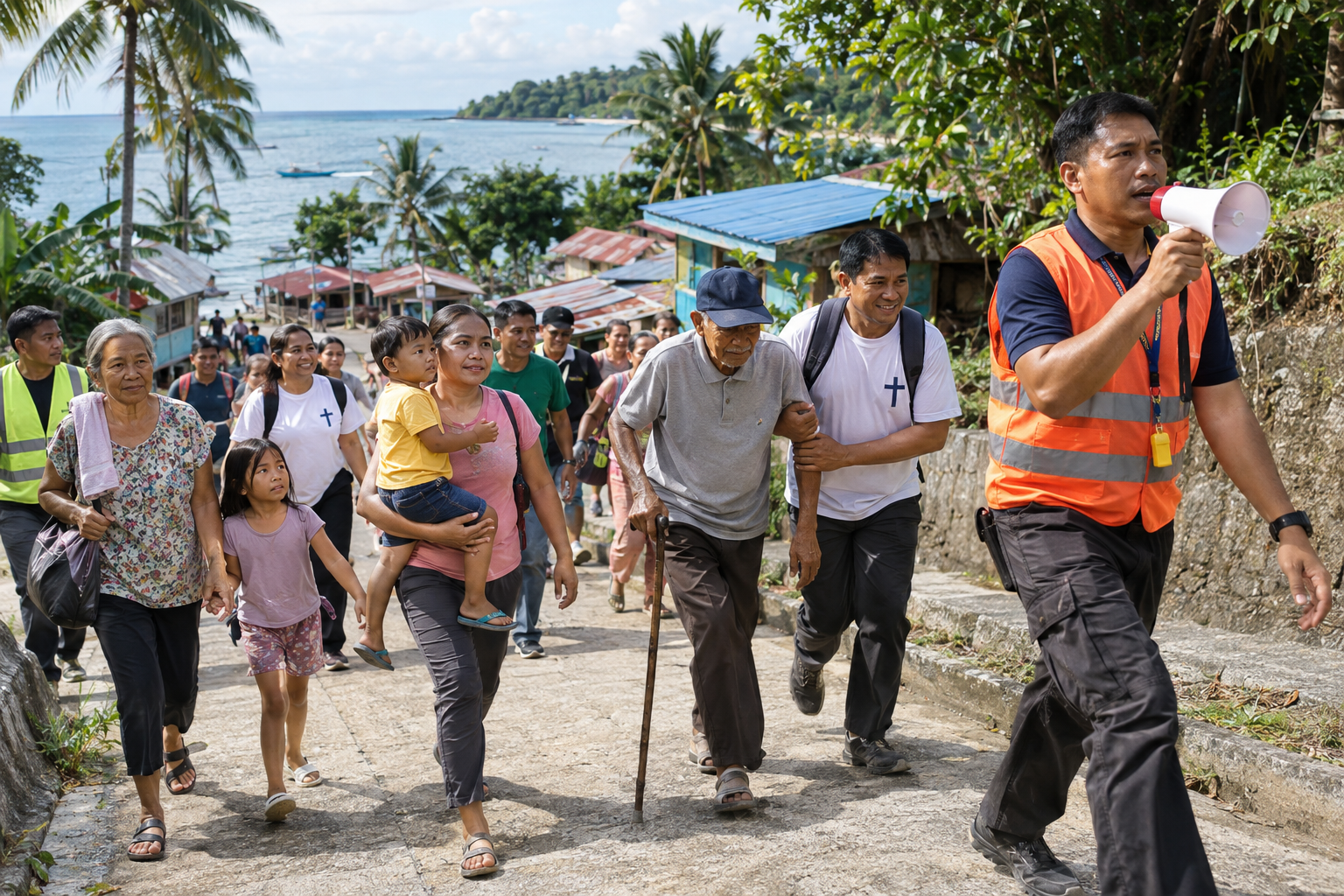
In a coastal community, the first tsunami warning may not arrive through a phone, siren, or official announcement. It may be the ground shaking so strongly that standing becomes difficult. It may be the sea suddenly drawing back. It may be an unusual roar from the water. When any of these signs appear, people near the shore must move immediately toward high ground or farther inland.
That urgent message is especially timely on November 5, World Tsunami Awareness Day. The 2026 theme, “Be Tsunami Ready: Resilience Begins with You,” emphasizes that warning technology saves lives only when people understand the danger, trust the message, know where to go, and act quickly. The United Nations is calling communities to learn evacuation routes, agree on meeting points, prepare essentials, and practise through inclusive drills.
The Philippines needs this knowledge. The Philippine Institute of Volcanology and Seismology says all of the country’s coastal areas can be affected by tsunamis. Local tsunamis caused by nearby earthquakes can arrive within minutes—possibly before a formal warning reaches every home. In October 2026, PHIVOLCS again urged people near the coast not to wait for an alert after strong or prolonged shaking.
Churches and mission teams are not replacements for PHIVOLCS, local disaster offices, police, health workers, or trained responders. But they are often trusted, present, and connected across generations. They can help official guidance reach people, turn knowledge into practice, and notice neighbors who might otherwise be left behind.
Learn the natural warnings: shake, drop, roar
PHIVOLCS summarizes three natural signs of a possible local tsunami as “shake, drop, roar”: strong ground shaking; a sudden rise or fall in sea level; and an unusual roaring sound from the sea. Any one of these can be a signal to leave the coast immediately. A person does not need to see a wave or receive a text message before moving.
After strong shaking, first protect yourself from falling objects. As soon as it is safe to move, go to high ground or farther inland by the route identified by local authorities. Stay away from beaches, rivers, estuaries, and other waterways that connect with the sea. Do not go to the shore to investigate, take photographs, collect stranded fish, or watch the water. If a wave is visible, there may be too little time to escape.
A tsunami is not always one dramatic wall of water. It can arrive as a fast flood or a series of waves over many hours. The first wave may not be the largest. People should remain in the safe area until authorities give an official all-clear, even if the water appears calm.
Know the route before an emergency
A church near the coast should ask its barangay and city or municipal disaster risk reduction and management office for the official hazard map, evacuation routes, safe areas, warning methods, and assembly points. Do not guess that a familiar hill, school, or concrete building is safe. Do not label a church building as an evacuation center unless the responsible authorities have assessed and designated it.
Walk the route in ordinary conditions. Measure how long it takes at the pace of a child, an older person, and someone with limited mobility. Notice narrow paths, steep steps, locked gates, damaged bridges, heavy traffic, flood-prone areas, and places that become dark at night. Ask what alternative route is available when the usual way is blocked.
Families should choose a meeting point in the safe area and decide who will help children, older relatives, or household members with disabilities. During a real evacuation, searching along the coast for a missing family member can place more people in danger. A clear reunification plan allows everyone to move inland and meet safely.
Make the last mile of warning work
Sirens and mobile alerts are important, but no single channel reaches everyone. Power may fail. A person may have no phone signal, be asleep, work on a fishing boat, speak another language, or not hear a siren. Churches can support the official system by helping local leaders map these gaps before a crisis.
Use methods approved by the local disaster office: bells, public-address systems, door-to-door teams, radio, text trees, sign language, picture-based instructions, and messages in the languages people actually use. Assign roles rather than relying on spontaneous volunteers. Someone should know who receives the official alert, who starts the communication chain, and who checks that each zone has been reached.
Mission teams should not post unverified warnings or dramatic rumors. Share information from PHIVOLCS, the National Disaster Risk Reduction and Management Council, local government, and other authorized agencies. In a fast local event, natural warnings still require immediate evacuation; afterward, official sources guide continued movement, shelter, and return.
Plan with people who may be left behind
An inclusive plan is not a general plan followed by a last-minute exception. It is created with people who understand the barriers. Invite children, older people, pregnant women, persons with disabilities, caregivers, fisherfolk, vendors, migrants, tourists, and people who live or work alone to help design and test the route.
Ask specific questions. Can a wheelchair use the path? Can a Deaf person receive the warning? Can someone with low vision follow the route? Is there time to collect essential medicine? Who will carry an infant? What happens if a caregiver is away at work? Are instructions understandable to a visitor who does not speak the local language?
Create a voluntary, confidential support list with consent and appropriate data protection. Pair people with trusted neighbors, but name backups because the first helper may be absent. Keep assistive devices with the person whenever possible. Never assume that everyone with the same disability needs the same help; ask and respect the answer.
Practise without turning a drill into a performance
A good drill builds useful memory. Coordinate it with the barangay and local disaster office. Explain the purpose, route, signals, safety rules, and stopping point. Then practise moving from the shore or church to the official safe area. Time the journey and invite honest feedback afterward.
Drills should include realistic conditions without creating panic. Try a route during rain or low light only when authorities judge it safe. Test what happens if one gate is closed or a usual path is blocked. Include children in age-appropriate ways, and provide advance support for people who may find alarms or crowds distressing.
Do not use a drill to shame people who move slowly. The purpose is to improve the system. If an older neighbor cannot reach the safe area in time, the answer is not to blame them; it is to adjust the route, transport support, warning time, or assigned assistance with the authorities.
Prepare a light, reachable evacuation kit
A household kit should be easy to grab and carry uphill. It may include drinking water, ready-to-eat food, essential medicine, a first-aid kit, flashlight, radio, whistle, power bank, face masks, copies of important information in a waterproof pouch, and basic supplies for children or older family members. Needs vary, so follow national and local guidance.
Do not let packing delay evacuation. Life comes first. Keep shoes, keys, medicines, and a small bag in a known place. Churches can teach preparedness, help vulnerable households identify affordable priorities, and store ministry records safely, but public distribution should be coordinated so that it does not block routes or create a crowd near the danger zone.
Serve after evacuation without taking over
Once people reach safety, local authorities lead response and shelter coordination. Churches can offer trained volunteers, water, meals, charging, child-friendly support, prayer, translation, transport coordination, and careful listening when requested. Help should be given according to need, never in exchange for attending worship, sharing a testimony, posing for a photograph, or making a religious commitment.
Protect people’s dignity and privacy. Do not livestream grief, damaged homes, injured people, or separated children. Verify family relationships before reunification. Refer medical, mental-health, safeguarding, and protection needs to qualified services. Record donations and decisions transparently.
Livelihood recovery matters too. Coastal families may lose boats, nets, tools, shops, documents, and access to markets. Churches can listen to local priorities, support fair community-led recovery, and connect people with appropriate government and professional help. Do not send equipment that is unsafe, unsuitable, or likely to undermine local suppliers.
Let local leadership shape mission practice
A visiting mission team should receive tsunami orientation before serving in a coastal area. Members need to know the natural warning signs, official route, assembly point, communication plan, local emergency contacts, and who has authority to stop an activity. The same plan applies during beach outreach, children’s ministry, home visits, transport, and recreation.
Foreign visitors should not become the public face of community resilience. Local residents, disaster officers, health workers, pastors, teachers, and fisherfolk carry knowledge that outsiders do not. Mission workers serve best by listening, following instructions, contributing appropriate skills, and strengthening relationships that remain after the team leaves.
UNESCO’s Tsunami Ready programme describes readiness as active collaboration among warning agencies, government, scientists, community leaders, and the public. Recognition never means a place is tsunami-proof. Preparedness is a continuing practice of learning, testing, correcting, and remembering.
A practical church readiness check
Church leaders can begin with seven questions: Do we know whether our building and ministry areas are in a tsunami hazard zone? Can every worker recognize shake, drop, and roar? Is the official route posted and understood? Have we walked it with children, older adults, and persons with disabilities? Can we receive and repeat verified warnings accessibly? Do visiting teams receive orientation? Have we practised with the barangay and reviewed what failed?
Write the answers, assign responsible people, and set dates. Keep emergency contacts where leaders can reach them without internet access. Review the plan when routes, buildings, staff, or community needs change. A checklist does not replace wisdom, but it helps good intentions become reliable action.
Love moves toward safety
Tsunami awareness is not about living in fear of the sea. It is about respecting a real hazard and giving people the knowledge to act. A few minutes of correct action can protect a lifetime of relationships, ministry, work, and hope.
For churches, preparedness is one expression of loving our neighbor. It pays attention before the emergency, shares accurate information, practises patiently, and refuses to leave the most vulnerable behind. When the ground shakes or the sea pulls back, love does not gather at the shoreline to watch. Love helps the whole community move to safety.
Further reading: the United Nations’ World Tsunami Awareness Day guidance; DOST-PHIVOLCS on tsunami signs, safety, and preparedness; UNESCO-IOC’s Tsunami Ready programme; and UNDRR’s 2026 Asia-Pacific coastal resilience event.
Prepare to serve coastal communities wisely
Ask SendUsAll about responsible mission preparation, locally led partnership, and practical service in the Philippines.
Contact SendUsAll