A person may understand a national language at school or work and still pray, grieve, joke, dream, and speak to family in another language. That first language often carries the deepest memories and clearest meaning. When Scripture is heard in it, familiar words can become newly alive: not a message imported from far away, but good news that speaks within the life of the community.
October 31 is Reformation Day, remembering a movement of church renewal that began in Europe more than five centuries ago. One lasting emphasis was that ordinary people should have access to Scripture in the language they understand. Martin Luther's German translation was not the first Bible in a local language, but it became a powerful example of making Scripture available beyond scholars and church officials.
That concern remains urgent far beyond Europe. Wycliffe's statistics updated on October 5, 2026 say one in five people worldwide are still waiting for the Bible in their language. Of 7,394 living languages, 3,204 have no Scripture. Translation work is under way in 4,444 languages, yet 512 languages spoken by 36.3 million people still need work to begin.
Translation is about understanding, not only words
A Bible can be present in a country while remaining difficult for many people to understand. A national translation may serve millions, but smaller language communities can still be left with unfamiliar vocabulary, grammar, or ways of telling a story.
Good translation does more than replace one word with another. It asks how meaning works in the receiving language. How are family relationships described? How does the community speak about forgiveness, covenant, sacrifice, spirit, honor, shame, land, and authority? Which expressions sound natural, and which might create the wrong idea?
This work requires biblical scholarship, careful language study, community knowledge, testing, revision, and prayer. A translation that is fast but confusing is not a gift. Accuracy and clarity belong together.
Local speakers must lead
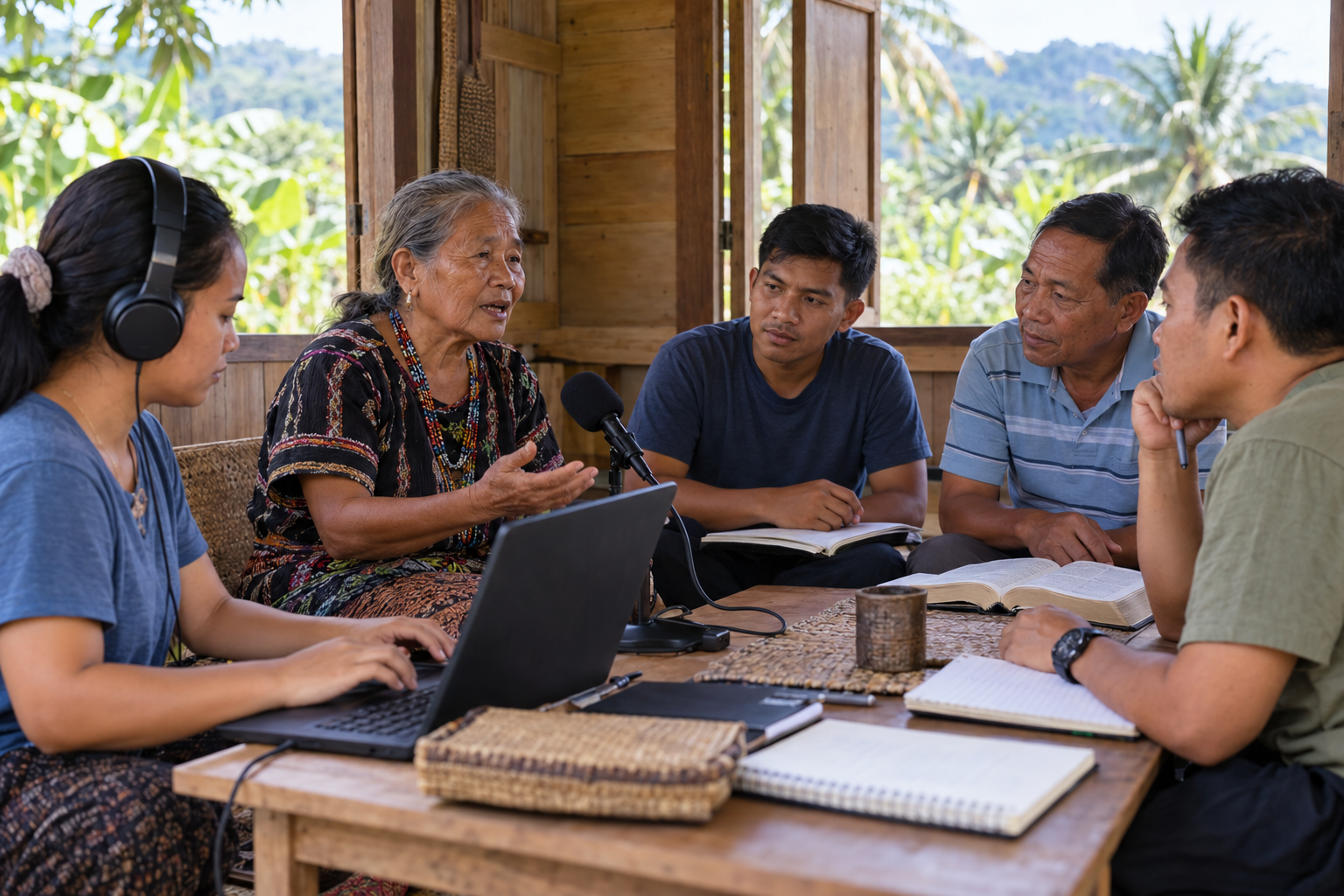
The best language experts are the people who speak the language every day. Elders may remember vocabulary, oral histories, and expressions younger generations rarely hear. Women may carry forms of language used in homes, childbirth, caregiving, farming, markets, and community relationships. Young people may understand new media, changing speech, and how their generation listens.
Outside missionaries can bring training, biblical languages, technology, funding, and connections. They should not take control. Translation becomes stronger when local churches and language communities choose priorities, select translators, test the work, resolve difficult questions, and decide how Scripture will be shared.
A locally led process also protects dignity. The language is not an obstacle that missionaries must overcome. It is a living part of a people's identity. Translation should strengthen the community's voice, not suggest that its culture has value only after outsiders arrive.
Southeast Asia needs oral Scripture too
Many communities in Southeast Asia pass knowledge through storytelling, song, recitation, and conversation. Some languages are rarely written. Others have a writing system, but many speakers prefer listening or have limited access to books.
Wycliffe Global Alliance began a three-year program in 2026 to train oral translators across Southeast Asia. Participants are learning to translate Scripture into spoken forms and to mentor others. Oral Bible Translation can use carefully recorded stories, passages, songs, or dramatic readings that communities review for accuracy and naturalness.
Oral work is not a lesser version of a printed Bible. Scripture itself was often heard in gatherings before most believers owned personal copies. Audio allows older adults, people with limited literacy, busy workers, people with visual disabilities, and communities without affordable books to listen together.
A Philippine story of language dignity
In August 2026, members of the Pulangiyen community in Bukidnon heard the Gospel of Matthew read in Pulangiyen during a Bible awareness program supported by Wycliffe Philippines. One man said it was the first time he had seen his language written.
That moment shows that translation can serve more than individual reading. It can affirm that a community's language is worthy of writing, recording, teaching, and passing to children. It can help local believers explain faith with the words their neighbors actually use.
Wycliffe Philippines lists work with many language communities, including Ata in Davao City, Blit Manobo in South Cotabato, Iwak in Nueva Vizcaya, Sama Samalnon in Davao, and Tau't Bato in Palawan. Each language has its own history and community. They should never be treated as one generic “tribal” group.
Listen before choosing a project
A church may hear that a community lacks Scripture and immediately plan to print books or record an app. First, ask local leaders what already exists. There may be a translation in progress, an approved alphabet, trained translators, or complex decisions that outsiders do not yet understand.
Meet language associations, local churches, elders, teachers, and recognized translation organizations. Ask which Scripture portions are most needed, how people prefer to receive information, who owns recordings, how materials will be tested, and what government or community permissions apply.
Do not begin a competing translation simply because another team works slowly. Careful translation takes time. Parallel projects can confuse churches, divide communities, and waste limited funds.
Translation must include community checking
A draft is not finished when a translator likes it. Different speakers should listen or read and explain what they understand. The team needs to discover where a phrase is unnatural, ambiguous, offensive, too technical, or unintentionally humorous.
Consultants help review faithfulness to the biblical text. Local pastors and mature believers consider theological clarity. Community members who are not already familiar with the passage reveal whether it communicates naturally. Each kind of checking answers a different question.
Feedback should include women, younger adults, older speakers, people from different villages, and people with disabilities when relevant. A translation tested only among educated male leaders may miss how much of the community actually speaks.
Technology is useful, but it is not the translator
Software can organize terms, compare passages, edit audio, store recordings, and help teams work across distance. Artificial intelligence may suggest drafts or identify repeated patterns. These tools can save time, but they cannot replace spiritual, linguistic, cultural, and community judgment.
AI systems can produce confident errors, import meanings from dominant languages, or mishandle rare languages with little training data. Sensitive recordings and community information may also be exposed when uploaded to unapproved services.
Translation teams need clear technology policies: what tools are authorized, where data is stored, who can access it, how backups are protected, and which human reviewers approve every passage. Speed should never outrun accuracy, consent, or security.
Protect people and sensitive communities
In some places, participation in Christian translation work can expose people to social pressure, discrimination, or danger. Publicity that seems encouraging to supporters may reveal a translator's face, village, faith, or contact information.
Ask the local team what can safely be shared. Use pseudonyms or broad locations when necessary. Remove identifying details from photos and recordings. Do not post draft Scripture publicly without authorization, and do not name communities as “unreached” if that label may create risk or insult local believers who have served faithfully for years.
Financial records, translator contracts, consent forms, and audio files also require protection. Churches supporting the work should follow the security standards of the implementing organization rather than requesting private updates for fundraising.
Scripture access includes literacy and discipleship
A completed translation does not automatically become a used translation. People need to know that it exists, trust its quality, obtain it affordably, and learn how to engage with it. Some communities need literacy materials or help reading a new writing system.
Local churches can host listening groups, family reading times, youth discussions, pastor training, and Scripture-based storytelling. They can help distribute printed, audio, digital, and accessible formats. Materials should work on the devices and internet connections people actually have.
Discipleship must remain locally rooted. Outside teachers should not use a new translation to make the church permanently dependent on them. Equip local pastors, women, youth leaders, and small-group facilitators to teach and apply Scripture within their own community.
Translation is never truly finished
Languages change. New generations use different words. Communities move to cities, children attend schools in national languages, and technology changes how people communicate. A translation may need spelling updates, revised terms, new audio, or additional formats.
Support should therefore include long-term revision, archiving, training, and ownership. Help local institutions maintain files and equipment. Train more than one person for each role. Plan how recordings and publications will remain available after a grant ends or an outside missionary leaves.
A healthy project belongs to the community strongly enough to continue without constant foreign supervision.
How churches can take part wisely
Churches can pray for named projects when sharing those names is safe. They can support recognized translation organizations, sponsor training, provide recording equipment requested by local teams, and encourage members with gifts in language, theology, audio, software, teaching, or administration.
Mission teams can learn basic phrases in the local language and show willingness to listen. Pastors can preach about the dignity of every language and resist the idea that English fluency equals spiritual maturity. Donors can fund the quiet stages of checking and revision, not only the exciting launch ceremony.
Partnership should be accountable. Ask how local leaders participate, how translations are checked, how safeguarding and security are handled, how finances are reported, and how Scripture will be used after publication. These questions strengthen rather than weaken trust.
Reformation that continues in every language
Reformation Day remembers a European event, but its deepest missionary lesson is not about preserving Europe at the center of the church. It is that God's Word should not be locked behind a language people cannot understand.
Today that calling is being carried by translators, storytellers, pastors, elders, audio technicians, consultants, and local churches across Southeast Asia. They sit around tables, test difficult words, record passages again, listen to community feedback, and pray for clarity.
The goal is not merely another book on a shelf or another file on a phone. It is for people to hear the wonders of God in the language that reaches home. When the church honors every language, shares authority with local believers, and supports careful translation, mission becomes more understandable, more trustworthy, and more deeply rooted.
Further reading: Wycliffe's October 2026 Bible translation statistics, the Wycliffe Global Alliance project on oral translation training in Southeast Asia, the Philippine Bible Society report on the October 2026 illumiNations Asia roundtable, Wycliffe Philippines' story about the Pulangiyen Gospel of Matthew, and the Lutheran World Federation on Reformation Day and Scripture in ordinary language.
Help every community hear Scripture clearly
Ask SendUsAll about culturally respectful mission, local church partnership, and serving language communities in the Philippines.
Contact SendUsAll