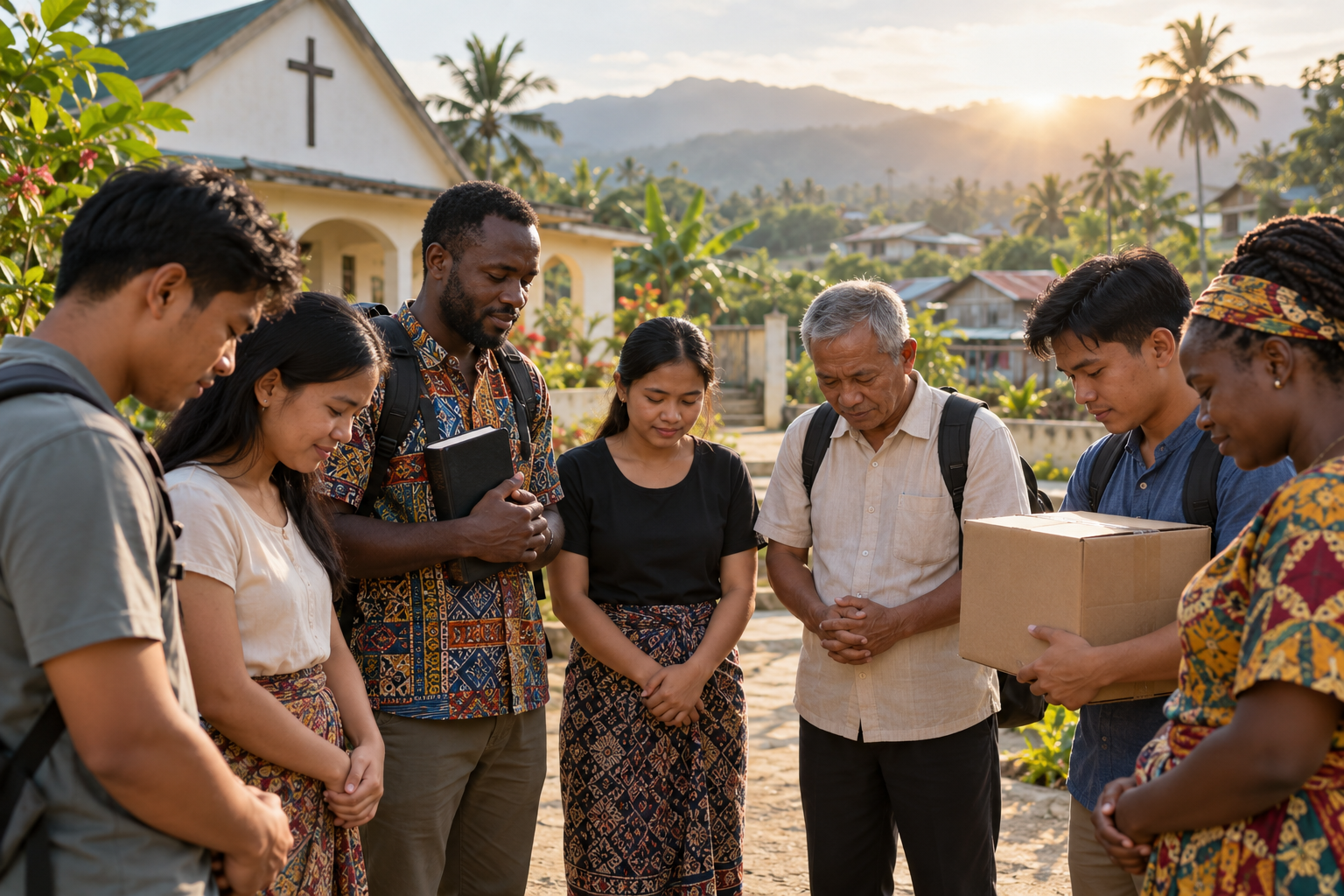
On October 18, 2026, Christians around the world will mark an important missionary moment. World Mission Sunday is celebrating its 100th year under the theme “One in Christ, United in Mission.” This centenary is more than a date on the church calendar. It is an invitation to remember that the Gospel belongs to every nation, and the work of sharing it belongs to the whole Church.
World Mission Sunday began in 1926 as a Roman Catholic observance of prayer, sacrifice, and support for missionary work. Its anniversary is receiving fresh attention this week because it asks a question every Christian community should consider: How can believers who are different in language, culture, church tradition, and nationality work together to make Jesus known?
That question is especially important in Southeast Asia. The region includes crowded cities, remote islands, mountain communities, migrant families, many languages, and many religious traditions. Some places have strong and growing churches. Other communities have little opportunity to hear a clear explanation of the Gospel. Mission here cannot be reduced to one large event or one visiting preacher. It requires prayerful presence, patient listening, faithful discipleship, and partnership with local believers.
Unity makes the Gospel visible
Jesus prayed that His followers would be one. Christian unity does not mean that every church must look exactly the same. It means that believers recognize one Lord, one Gospel, and one mission. When churches compete, protect their own names, or refuse to cooperate, the message they preach becomes harder to see. When they pray together, serve together, and honor one another, people can see the reconciling power of Christ.
Across Southeast Asia, mission often becomes strongest when local churches, missionaries, pastors, volunteers, and community leaders work side by side. A visiting team may bring energy, experience, or resources. A local church brings language, relationships, cultural understanding, and long-term presence. Neither should treat the other as less important. Healthy partnership joins these strengths without taking control away from the people who will remain after an outreach ends.
This kind of unity is practical. It means planning together before an event. It means listening to local pastors before choosing a ministry method. It means sharing credit instead of building one organization’s reputation. It also means making a plan for follow-up, so people who respond to the Gospel can be welcomed into a local community of faith.
Mission begins with listening
Love listens before it speaks. Cross-cultural missionaries may arrive with sincere passion, but passion alone does not guarantee wisdom. The words, gestures, leadership styles, and ministry methods that worked in one country may communicate something different in another. A faithful missionary remains teachable.
In the Philippines, relationships and trust are deeply important. People often want to know whether a missionary truly cares about their family and community, not only whether the missionary can preach well. In other parts of Southeast Asia, religious identity may be closely connected to family, ethnicity, or national history. A careless approach can create fear or shame. A respectful approach makes room for honest conversation and protects the dignity of every person.
Listening does not weaken the Gospel. It helps us communicate the Gospel clearly and lovingly. Missionaries should learn names, ask good questions, understand local concerns, and receive correction without becoming defensive. Cultural humility helps us distinguish the unchanging message of Jesus from our own familiar way of presenting it.
Prayer and practical love belong together
World Mission Sunday has long connected prayer with generous action. This is also an important pattern for ministry in Southeast Asia. Communities may be facing poverty, displacement, natural disaster, family breakdown, loneliness, limited access to education, or pressure on young people. Christians are called to speak about eternal hope while also showing the compassion of Christ in present needs.
Practical service may include food assistance, children’s ministry, pastoral training, disaster response, counseling, health support, or help for a family in crisis. These actions should never be used to pressure vulnerable people. Christian compassion is not a transaction. We serve because every person bears God’s image and deserves dignity.
Prayer keeps this service rooted in God rather than in human pride. We pray for open doors, wise leaders, protection, provision, and lasting spiritual fruit. We also pray that God will change the missionary. Cross-cultural ministry reveals our impatience, assumptions, and desire for control. The Holy Spirit forms humility in us as we learn to depend on God and on one another.
Every church can take one faithful step
Mission is not only for people who move to another country. Every congregation can participate. Some are called to go. Some organize outreaches or welcome short-term teams. Some train pastors, disciple young people, translate resources, provide transport, or open their homes. Others give faithfully or pray for one community over many years.
A church can begin by choosing one clear step: pray regularly for an unreached community, build a respectful relationship with a migrant family, partner with a trusted local ministry, equip young believers to share their faith, or support a missionary who serves under local accountability. Small acts of obedience become strong when they are repeated with faithfulness.
For African missionaries serving in Asia, this centenary carries another beautiful reminder. Mission is no longer described accurately as movement only from the West to the rest of the world. God is sending workers from Africa, Asia, Latin America, and many other places. The Gospel is moving from everywhere to everywhere. Yet this growing movement must remain centered on Christ, shaped by humility, and connected to the local church.
United for the next chapter
One hundred years of World Mission Sunday gives the Church a reason to thank God for missionaries who prayed, went, served, suffered, and planted churches before us. It also points forward. The next chapter of mission in Southeast Asia will need believers who are spiritually formed, culturally prepared, and willing to serve in partnership.
May this missionary moment move us beyond admiration into obedience. Let us pray across borders, give with integrity, listen with humility, and go where God sends us. When Christ is at the center, our different gifts and backgrounds do not have to divide us. They can become part of one faithful witness: one Church, one hope, and one mission to make Jesus known.
Further reading: the official message for the 100th World Mission Day and the October 2026 Vatican News reflection.
Take part in the mission
Pray with us, serve alongside local churches, or ask how SendUsAll can help your team organize a culturally respectful mission in the Philippines.
Contact SendUsAll